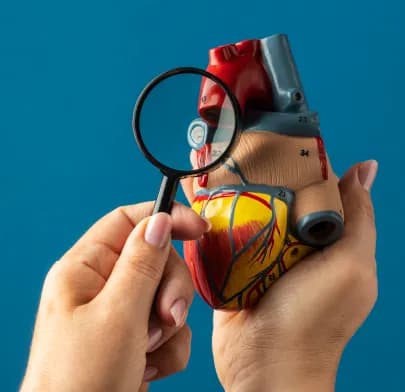
Aortic Valve Replacement
An Aortic Valve Replacement is a surgical procedure to replace a diseased Aortic Valve in your heart. The aortic valve is located between the left ventricle of your heart and the aorta, the largest artery in your body. The aortic valve controls the flow of blood out of your heart to the rest of your body.
Book Your ConsultationAn Aortic Valve Replacement is a surgical procedure to replace a diseased Aortic Valve in your heart. The aortic valve is located between the left ventricle of your heart and the aorta, the largest artery in your body. The aortic valve controls the flow of blood out of your heart to the rest of your body.
Symptoms Of Aortic Valve Replacement
Symptoms
 Chest Pain
 Shortness of Breath
 Fatigue
 Heart Palpitations
Types of conditions
There are 6 main types of Aortic Valve Replacement
Mechanical Aortic Valve
Biological (Tissue) Aortic Valve
Transcatheter Aortic Valve Replacement (TAVR)
Sutureless Aortic Valve Replacement
Robotic-Assisted Aortic Valve Replacement
Homograft (Human Donor) Aortic Valve
Mechanical Aortic Valve
- Mechanical valves are made of durable materials such as titanium or carbon and are designed to last a lifetime.
- They offer excellent durability and long-term function but require lifelong anticoagulation therapy (blood thinners) to prevent blood clots.
- Biological valves are made from animal tissues, typically from cow or pig hearts, or sometimes from human tissue donors.
- These valves do not require lifelong anticoagulation therapy, making them suitable for patients who cannot tolerate blood thinners.
- While they offer good durability, biological valves may need replacement after 10 to 15 years, especially in younger patients.
- TAVR is a minimally invasive procedure used to replace the aortic valve without the need for open-heart surgery.
- During TAVR, a collapsible valve is delivered to the heart through a catheter inserted into a blood vessel, typically in the groin or chest.
- TAVR is often recommended for older patients or those at high risk for complications from traditional open-heart surgery.
- Recovery time is generally shorter compared to open-heart surgery, and TAVR may be performed under local anesthesia.
- Sutureless valves are designed to minimize the time and complexity of the surgical procedure.
- These valves have a special design that allows them to be anchored in place with fewer sutures or even without sutures altogether.
- Sutureless valves can reduce the duration of surgery and may be particularly beneficial for patients with complex medical conditions or those at higher risk for complications.
- Robotic-assisted surgery utilizes robotic arms controlled by the surgeon to perform precise movements during the procedure.
- This technology offers enhanced precision, dexterity, and visualization, potentially leading to improved outcomes and shorter recovery times.
- Robotic-assisted aortic valve replacement is a minimally invasive approach that may be suitable for select patients and may result in smaller incisions, less trauma, and reduced post-operative pain.
- Homograft valves are harvested from human donor hearts and can be used to replace the diseased aortic valve.
- These valves may be beneficial in patients with complex anatomical issues or those requiring valve replacement due to infection or other specific conditions.
- Homograft valves offer good hemodynamic performance and may not require anticoagulation therapy, but availability may be limited, and there is a risk of rejection.
SYMPTOMS OF AORTIC VALVE DISEASE
-
Chest Pain Chest pain is a very common symptom, you might feel tightness in your lungs and chest, especially with physical activity
-
Shortness of Breath You may feel extreme exhausted during increased activity
-
Fatigue You may have a hard time breathing deeply, especially after being active.
-
Lightheadedness You feel dizzy or even lose consciousness, especially during activity.
-
Heart Palpitations An irregular heartbeat that feels like a rapid, fluttering sensation in your chest.
DIAGNOSIS
To diagnose aortic valve disease, a health care professional examines you and asks questions about your symptoms and medical history. Tests to diagnose aortic valve disease include:
-
Echocardiogram An echocardiogram uses sound waves to create pictures of the beating heart.There are different types of echocardiograms. The type you have depends on the information your health care team needs.
-
Electrocardiogram (ECG or EKG) This quick test records the electrical activity of the heart. It shows how the heart beats.
-
Chest X-ray A chest X-ray shows the condition of the heart and lungs. It can help determine if the heart is enlarged, which can be a sign of certain types of aortic valve disease or heart failure.
-
Cardiac computerized tomography (CT) scan A cardiac CT scan uses a series of X-rays to create detailed images of the heart and heart valves. The test may be done to measure the size of the aorta and look at the aortic valve more closely.
STAGES
After testing confirms a diagnosis of aortic or other heart valve disease, your health care team may tell you the stage of disease. Staging helps determine the most appropriate treatment. Heart valve disease is staged into four basic groups:
1. Stage A: At risk Risk factors for heart valve disease are present.
2. Stage B: Progressive Valve disease is mild or moderate. There are no heart valve symptoms.
3. Stage C: Asymptomatic severe There are no heart valve symptoms but the valve disease is severe.
4. Stage D: Symptomatic severe Heart valve disease is severe and is causing symptoms.
RISK FACTORS
Most people who have open aortic valve replacement will have a successful outcome. However, there are some possible risks. These include:
- Infection
- Bleeding
- Irregular heart rhythms
- Blood clots leading to stroke or heart attack
- Complications from anesthesia
Certain factors increase the risk of complications. Some of these are as follows:
- Chronic illness
- Other heart conditions
- Lung problems
- Increased age
- Being overweight
- Being a smoker
- Infections
PREPARING FOR SURGERY
As you plan for the surgery, you and your healthcare provider will decide what kind of valve will work best for you. Your surgeon will replace your valve with a biological valve or a mechanical valve.
- Biological valves are made mainly from pig, cow, or human heart tissue. Biological valves don’t last as long as mechanical valves but have less risk for blood clots.
- Mechanical valves are man-made. People with mechanical valves need to take blood-thinning medicines for the rest of their lives because of the risk for blood clots. Mechanical valves also have an increased risk for infection.
Preparing for aortic valve replacement surgery involves several important steps. Here are some key aspects to consider:
Understanding the Procedure:
- Familiarize yourself with the details of the surgery, including the purpose, risks, benefits.
- Discuss any concerns or questions with your healthcare provider.
Health Assessment: Your healthcare team will conduct preoperative tests to assess your overall health and suitability for surgery. These tests may include:
- Cardiac catheterization (heart cath)
- Chest X-ray
- Computed tomography (CT) scan
- Echocardiogram (echo)
- Electrocardiogram (EKG)
- Lab tests (blood and urine)
Medications and Allergies: Inform your healthcare team about all the medications you currently take and any drug allergies you may have.
Anesthesia and Post-Operative Care
- Arrange for someone to accompany you to the hospital and take you home after the surgery. Anesthesia and pain medicine may make it unsafe for you to drive or travel alone
- Understand the post-operative care instructions, including follow-up appointments and any necessary lifestyle adjustments.
RECOVERY
- After an aortic valve replacement, you'll usually need to stay in hospital for about a week.
- The time it takes to fully recover varies depending on factors like your age and overall health.
- Your breastbone will usually heal in about 6 to 8 weeks, but it may take 2 to 3 months before you feel normal.
Your journey to good health begins here

Accredited Hospitals
Nationally accredited hospitals for high-quality care

Multi-language Support
Convey your needs in the language you're most comfortable in

Travel Booking Assistance
Seamless booking assistance for your healthcare journey

Personalised Treatment Plans
A treatment journey tailored to all your preferences and needs

Unparalleled Hospitality
Experience exceptional hospitality during your stay

Easy Medical Visa Approvals
Dedicated assistance for medical visa requirements

Your Medical Assistant
Get instant help planning your treatment journey
The best hospitals are partnered with Karetrip
Access world-class facilities from top hospitals










Consult with the most experienced doctors
Experience premium care from leading specialists





Cost estimation
Learn about the expenses involved in the procedure and what factors affect them.

The cost of aortic valve replacement surgery varies due to several factors. Hospital charges, surgeon fees, and anesthesia costs all contribute to the total expense. Pre-operative tests and post-operative care also influence costs. Location, the type of valve used (mechanical or biological), and the surgical approach (open-heart or minimally invasive) impact expenses. Insurance coverage affects individual costs, including deductibles and copayments. Our team can help you understand the precise costs based on your specific case and doctor’s recommendations.
Get Cost EstimationThe average cost of Aortic Valve Replacement in India is around ₹ 2,00,000 to ₹ 4,00,000.

₹ 4,00,000
High Cost
₹ 3,00,000
Average Cost
₹ 2,00,000
Low Cost
The LIST of AVERAGE COST of the Aortic Valve Replacement across TOP 7 cities in India in Indian Rupee (INR) is as follows :
City
Lowest Cost
Average Cost
Highest Cost
Hyderabad
₹ 2,00,000
₹ 3,00,000
₹ 4,00,000
Raipur
₹ 2,00,000
₹ 2,50,000
₹ 3,00,000
Bhubaneswar
₹ 2,00,000
₹ 3,00,000
₹ 4,00,000
Visakhapatnam
₹ 2,00,000
₹ 3,00,000
₹ 4,00,000
Nagpur
₹ 2,00,000
₹ 3,00,000
₹ 4,00,000
Indore
₹ 2,00,000
₹ 3,00,000
₹ 3,50,000
Aurangabad
₹ 2,00,000
₹ 3,00,000
₹ 4,00,000
Commonly Asked Questions
What is an aortic valve replacement?
Aortic valve replacement is surgery to replace a damaged aortic valve with a prosthetic valve.
Why might I need an aortic valve replacement?
You may need it if you have aortic valve disease causing symptoms like chest pain or shortness of breath.
How is aortic valve replacement done?
It can be done through open-heart surgery or minimally invasive techniques, where the damaged valve is replaced with a prosthetic one.
What is the recovery process like?
Expect a hospital stay followed by gradual recovery at home, with instructions on medication, activity level, and follow-up appointments.
How long does an artificial valve last?
Mechanical valves last longer but require lifelong blood-thinning medication, while biological valves don't last as long but usually don't need blood thinners.
Will I need lifestyle changes after surgery?
You may need to adopt a heart-healthy diet, regular exercise, and quit smoking to promote overall heart health and prolong the valve's lifespan.
Will I need to take medication after the surgery?
You may need medication to prevent blood clots or manage other conditions like high blood pressure or cholesterol. Your doctor will prescribe medications tailored to your needs.
How long will I need to stay in the hospital?
Hospital stays vary but typically range from a few days to a week, depending on the type of surgery and your recovery progress.
When can I resume normal activities after surgery?
You'll gradually increase activity as advised by your healthcare team. Light activities may be resumed after a few weeks, while more strenuous activities may require several months of recovery.
Will I need follow-up appointments after surgery?
Yes, regular follow-up appointments with your cardiologist or cardiac surgeon are essential to monitor your recovery and the function of the replacement valve.
How soon can I return to work after surgery?
This varies depending on the type of work you do and how well you're recovering. Some people may return to work within a few weeks, while others may need more time off.
Are there any long-term complications I should watch for?
While complications are rare, it's important to be aware of signs such as chest pain, shortness of breath, or palpitations and to report any concerns to your healthcare provider promptly.



"I had a successful surgery at Fortis Escorts Hospital, and it was all thanks to Karetrip's help in finding the right hospital for me. The entire process was smooth and stress-free, with Karetrip handling all the arrangements and answering any questions I had. The medical team at the hospital was outstanding, and the facilities were top-notch. I highly recommend Karetrip to anyone looking for a tension-free healthcare experience."
Read MoreFatima
Chattogram

"Thanks to Karetrip, I got connected with MAX Hospital in New Delhi. The team guided me through every step - from finding the right doctor to handling travel and visas. They made a daunting process feel like a breeze. The care I received at MAX Hospital was outstanding, and I can't thank Karetrip enough for making it possible. They truly put patients first and go the extra mile to ensure a smooth healthcare journey. I'm grateful beyond words!"
Read MoreHasan
Dhaka

"At first, I was unsure about having a medical procedure done in a foreign country. However, Karetrip's team at Indraprastha Apollo Hospital made me feel much better. The hospital was very clean, modern, and had everything they needed to help me. The staff were very kind and did everything they could to make me feel comfortable. I'm really happy with how my treatment turned out, and I appreciate Karetrip for making it easy and stress-free."
Read MoreImran
Sylhet
 Google Reviews4.9/5


I had a successful surgery at Fortis Escorts Hospital, and it was all thanks to Karetrip's help in finding the right hospital for me. The entire process was smooth and stress-free, with Karetrip handling all the arrangements and answering any questions I had. The medical team at the hospital was outstanding, and the facilities were top-notch. I highly recommend Karetrip to anyone looking for a tension-free healthcare experience.
Fatima
Chattogram
Google Reviews4.9/5