Prostatectomy
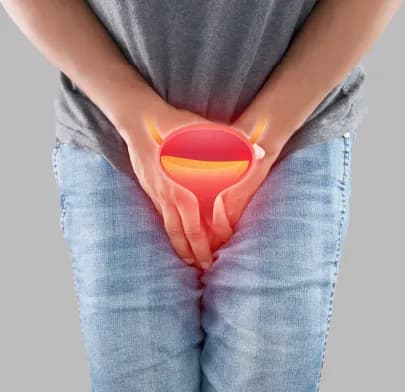
Prostatectomy is a surgery to remove a part or all of the prostate gland. The prostate gland is situated in the male pelvis, below the urinary bladder. It surrounds the urethra, which carries urine from the bladder to the penis. The procedure is used to treat a number of conditions affecting the prostate. It's most commonly used as a treatment for prostate cancer.
 Easy Medical Visa Approvals
Travel Booking Assistance
Comprehensive Treatment Plans
Multi-Language Support
Prostatectomy is a surgery to remove a part or all of the prostate gland. The prostate gland is situated in the male pelvis, below the urinary bladder. It surrounds the urethra, which carries urine from the bladder to the penis. The procedure is used to treat a number of conditions affecting the prostate. It's most commonly used as a treatment for prostate cancer.
When do we need a Prostatectomy
Symptoms
It is a surgical procedure used to remove all or part of the prostate gland, typically performed to treat Prostate Cancer or Benign Prostatic Hyperplasia.
 Prostate cancer
 Erectile Dysfunction
 Urinary Retention
 Pain or discomfort
Types of conditions
There are 2 main types of Prostatectomy
Simple prostatectomy
Radical prostatectomy
Simple prostatectomy
During a simple prostatectomy, a surgeon makes a vertical cut (incision) in your lower abdomen and removes the inner portion of your prostate through the cut while leaving the outer portion intact.
During a radical prostatectomy, a surgeon removes your entire prostate gland. They usually remove fat and tissues around your prostate, too.
DIAGNOSIS
Doctors most often recommend a radical prostatectomy to treat prostate cancer confined to the prostate in men and people assigned male at birth (AMAB). A healthcare provider may also recommend a simple prostatectomy if you have a condition that blocks your urethra and affects how you pee, such as benign prostatic hyperplasia (BPH).
RISK FACTORS
All surgical procedures have risks. Some risks of a prostatectomy include:
- Anesthesia risks.
- Healing problems.
- Possible need for a blood transfusion.
- Infection.
- Mass of clotted blood (hematoma).
- Blood clots.
- Fluid buildup at the surgical site (seroma).
Other risks of a prostatectomy include:
- Incontinence.
- Erectile dysfunction.
- Little or no ejaculate after orgasming (dry orgasm).
- Penile atrophy (due to reduced erectile function).
- Depression.
PREPARING FOR SURGERY
- Undergo a thorough medical evaluation by your healthcare team to assess your overall health, including any pre-existing conditions and medications you are taking.
- Have a detailed discussion with your surgeon about the procedure, including its risks, benefits, and potential complications. Address any questions or concerns you may have.
- Complete any preoperative tests or screenings recommended by your healthcare provider, such as blood tests, imaging studies, and electrocardiogram (ECG) to assess your baseline health status.
- Follow your surgeon's instructions regarding medication adjustments before surgery, including any changes to prescription medications, over-the-counter medications, and supplements. Some medications may need to be temporarily discontinued or adjusted to reduce the risk of bleeding or other complications.
- Follow bowel preparation instructions provided by your healthcare team to ensure your bowel is clear before surgery. This may involve a liquid diet, laxatives, or enemas to empty the bowel.
TREATMENT DETAILS
- Open Radical Prostatectomy: This is the traditional surgical approach where the surgeon makes a single large incision in the lower abdomen to remove the prostate gland.
- Laparoscopic Radical Prostatectomy: This approach involves making several small incisions in the abdomen through which a laparoscope and specialized surgical instruments are inserted to remove the prostate gland.
- Robotic-Assisted Radical Prostatectomy: This approach is similar to laparoscopic surgery, but with the assistance of a robotic surgical system controlled by the surgeon from a console.
RECOVERY
Most people can resume normal activities about eight weeks after an open prostatectomy. Recovery is usually faster after a robotic prostatectomy. Most people can resume normal activities four to six weeks after a robotic prostatectomy.
However, your recovery depends on the type of prostatectomy, your health history and any other conditions you have. A healthcare provider is the best person to tell you your recovery timeline.
Some instructions you must follow can be :
- Keep your surgical wound clean.
- No driving for 1-2 weeks after surgery.
- No high-energy activity for eight weeks.
- No climbing stairs more than necessary.
- No soaking in bathtubs, swimming pools, or hot tubs.
- Taking medications as prescribed to help with the pain.
After surgery you should expect that:
- You'll be given IV pain medications.Your doctor may give you prescription pain pills to take after the IV is removed.
- Your doctor will have you walk the day of or the day after surgery. You'll also do exercises to move your feet while you're in bed.
- You'll likely go home the day after surgery. When your doctor thinks it's safe for you to go home, the pelvic drain is taken out. You may need to return to the doctor in one or two weeks to have staples taken out.
- You'll return home with a catheter in place. Most men need a urinary catheter for seven to 10 days after surgery. Full recovery of urinary control can take up to a year after surgery.
- Make sure you understand the post-surgery steps you need to take, and any restrictions such as driving or lifting heavy things:
- You'll need to resume your activity level gradually. You should be back to your normal routine in about four to six weeks.
- You'll need to see your doctor a few times to make sure everything is OK. Most men see their doctors after about six weeks and then again every three months for the first year, and twice in the second year after surgery. If you have any problems or concerns, you may need to see your doctor sooner or more often.
- You'll probably be able to resume sexual activity after recuperating from surgery. After a simple prostatectomy, you can still have an orgasm during sex, but you'll ejaculate very little or no semen. After radical prostatectomy, full recovery of erectile function may take as long as 18 months for some men.
Your journey to good health begins here

Accredited Hospitals
Nationally accredited hospitals for high-quality care

Multi-language Support
Convey your needs in the language you're most comfortable in

Travel Booking Assistance
Seamless booking assistance for your healthcare journey

Personalised Treatment Plans
A treatment journey tailored to all your preferences and needs

Unparalleled Hospitality
Experience exceptional hospitality during your stay

Easy Medical Visa Approvals
Dedicated assistance for medical visa requirements

Your Medical Assistant
Get instant help planning your treatment journey
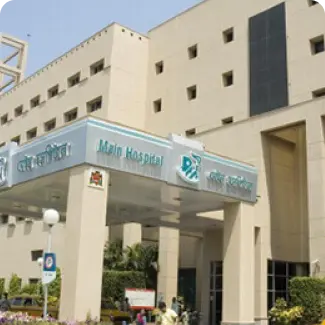
The best hospitals are partnered with Karetrip
Access world-class facilities from top hospitals






Consult with the most experienced doctors
Experience premium care from leading specialists



Cost estimation
Learn about the expenses involved in the procedure and what factors affect them.

A prostatectomy can cost you anywhere between ₹ 60,000 to ₹1,50,000, depending upon various factors.
Get Cost EstimationThe average cost of Prostatectomy in India is around ₹ 60000 to ₹ 150000.

₹ 150000
High Cost
₹ 100000
Average Cost
₹ 60000
Low Cost
The LIST of AVERAGE COST of the Prostatectomy across TOP 8 cities in India in Indian Rupee (INR) is as follows :
City
Lowest Cost
Average Cost
Highest Cost
Delhi
₹ 60000
₹ 100000
₹ 150000
Gurgaon
₹ 60000
₹ 100000
₹ 150000
Noida
₹ 60000
₹ 100000
₹ 150000
Bangalore
₹60000
₹ 100000
₹ 150000
Chennai
₹ 60000
₹ 100000
₹ 150000
Hyderabad
₹ 60000
₹ 100000
₹ 150000
Pune
₹ 60000
₹ 100000
₹ 150000
Mumbai
₹ 60000
₹ 100000
₹ 150000
Commonly Asked Questions
When will the catheter be removed?
The catheter is removed approximately 7-10 days after either a Radical Retropubic Prostatectomy or the Laparoscopic (Robotic) Radical Prostatectomy.
Is There A Bowel Preparation I Need To Take Prior To Surgery?
Depending on the type of surgery and your previous medical history a bowel preparation will be used. You will receive either 2 Fleet enemas (to be taken the evening prior to surgery) or 1-2 bottles of Magnesium Citrate (to be taken in the afternoon prior to surgery). Your surgeon will tell you which of the preparations you will need. In the morning of surgery, you may only have a sip of water to swallow any medications you are told to take, otherwise nothing to drink for 6 hours prior to arriving in the hospital.
How Can I Avoid Post-Operative Constipation?
Minimize the use of narcotic pain medicines (Vicodin, Codeine, Percocet, Tylenol #3), drink lots of water, and take stool softeners. If needed, prune juice or a teaspoon of mineral oil can help as well. Until you have a normal bowel movement, which often does not occur until 4-5 days after surgery, you should plan on eating primarily liquids.
When Can I Have Intercourse?
You may have intercourse as soon as you are comfortable to do so. Remember that you may not lift anything heavier than a laptop computer for 6 weeks following surgery. Intercourse, therefore, should be appropriately tailored.
What Should My Diet Be Prior To Surgery?
Please bring all the medications that you take at home (in the original containers), comfortable clothing and toiletries, and your BC Care Card or other proof of medical insurance. Leave all valuables at home including wedding rings and watches. Bring reading glasses if you wear them. Do not wear contact lenses.
Is exercise important after surgery?
Yes! No matter how active and fit you were prior to surgery, you will experience reduced strength and be limited in your level of activity following your prostate removal. To return to normal activity, you will need to follow a sensible exercise program, adapted to your level of health and fitness. Realistically it will be 6-8 weeks before you are back to your pre-surgical stamina and strength. However, you will be surprised that by employing a basic exercise program, how good you will feel in just a few weeks.



"I had a successful surgery at Fortis Escorts Hospital, and it was all thanks to Karetrip's help in finding the right hospital for me. The entire process was smooth and stress-free, with Karetrip handling all the arrangements and answering any questions I had. The medical team at the hospital was outstanding, and the facilities were top-notch. I highly recommend Karetrip to anyone looking for a tension-free healthcare experience."
Read MoreFatima
Chattogram

"Thanks to Karetrip, I got connected with MAX Hospital in New Delhi. The team guided me through every step - from finding the right doctor to handling travel and visas. They made a daunting process feel like a breeze. The care I received at MAX Hospital was outstanding, and I can't thank Karetrip enough for making it possible. They truly put patients first and go the extra mile to ensure a smooth healthcare journey. I'm grateful beyond words!"
Read MoreHasan
Dhaka

"At first, I was unsure about having a medical procedure done in a foreign country. However, Karetrip's team at Indraprastha Apollo Hospital made me feel much better. The hospital was very clean, modern, and had everything they needed to help me. The staff were very kind and did everything they could to make me feel comfortable. I'm really happy with how my treatment turned out, and I appreciate Karetrip for making it easy and stress-free."
Read MoreImran
Sylhet
 Google Reviews4.9/5


I had a successful surgery at Fortis Escorts Hospital, and it was all thanks to Karetrip's help in finding the right hospital for me. The entire process was smooth and stress-free, with Karetrip handling all the arrangements and answering any questions I had. The medical team at the hospital was outstanding, and the facilities were top-notch. I highly recommend Karetrip to anyone looking for a tension-free healthcare experience.
Fatima
Chattogram
Google Reviews4.9/5