Inside the World’s Largest Liver ICU: What It Means for Travelling Patients
In This Article
Inside the World’s Largest Liver ICU: What It Means for Travelling Patients

Navaneeth P S
Updated on March 03, 2026

Medically verified by Navaneeth P S
Fact checked by Dr. Arya
10 minutes
When you travel across borders for a liver transplant or complex hepatobiliary surgery, you spend months researching the best surgeon. You look at their success rates, their global reputation, and their surgical precision.
But there is a hidden truth in transplant medicine: The surgery is only one component of survival; optimal ICU care significantly influences short- and long-term outcomes.
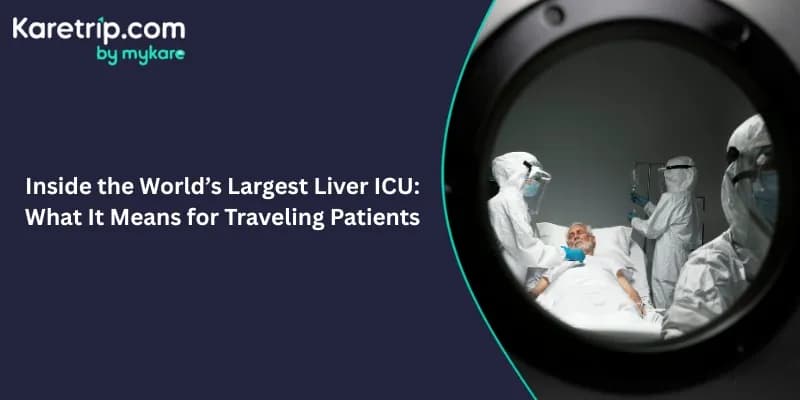
Following a liver transplant, the patient’s immune system is intentionally suppressed using immunosuppressive medications to prevent graft rejection. During this highly vulnerable window, the quality of the Intensive Care Unit (ICU), infection control measures, and multidisciplinary monitoring strongly influence outcomes. This is why many international patients specifically choose the Dr Rela Institute & Medical Centre in Chennai. It is home to one of the largest dedicated Liver Intensive Care Units globally, featuring approximately 130 specialised beds.
But what does this actually mean for a patient travelling from Oman, Bangladesh, or Kenya? At Karetrip, we manage the recovery logistics for international families every day. Here is an inside look at why a dedicated Liver ICU is an important safety component of your cross-border medical journey.
1. General ICU vs. Dedicated "Liver" ICU
Most top-tier hospitals have excellent general ICUs. However, a patient recovering from a liver transplant has highly specific physiological risks that differ from patients recovering from cardiac surgery or trauma.
-
The Infection Shield: A newly transplanted patient is significantly immunocompromised due to anti-rejection therapy. In a mixed general ICU, cross-infection risk can be higher due to varied patient populations. Dedicated transplant ICUs often utilise HEPA filtration, strict barrier nursing protocols, and, where available, positive-pressure isolation rooms to reduce airborne pathogen exposure.
-
Hepatology-Trained Nurses: Liver failure affects neurological status (hepatic encephalopathy), renal function (hepatorenal physiology), coagulation pathways, and metabolic balance. ICU nurses trained in transplant hepatology are skilled in recognising early signs of graft dysfunction, rejection, coagulopathy, or sepsis before overt clinical deterioration occurs.
-
1-to-1 Patient Care: In the immediate post-operative period (typically first 24–72 hours), transplant recipients often require high nurse-to-patient ratios (frequently 1:1), depending on haemodynamic stability and institutional protocol.
2. The First 72 Hours: What Actually Happens?
For accompanying family members, seeing a loved one in the ICU connected to tubes and monitors is distressing. Understanding the process can reduce anxiety.
-
Day 1 (Immediate Post-Op Stabilisation): The patient is transferred from the operating theatre to the ICU, usually intubated and mechanically ventilated. The primary goals are haemodynamic stabilisation, correction of coagulopathy, optimisation of fluid balance, and assessment of early graft function (including bile production, lactate clearance, and liver enzyme trends). Extubation is considered once the patient is stable and meeting respiratory criteria.
-
Day 2 (Organ Support & Monitoring): Close monitoring of urine output, renal function, coagulation profile, electrolytes, and graft parameters continues. If acute kidney injury develops, the ICU may initiate Continuous Renal Replacement Therapy (CRRT), a haemodynamically gentle form of dialysis suitable for critically ill patients.
-
Day 3 (Early Mobilisation): If clinically stable, early mobilisation begins under supervision. Sitting upright, chest physiotherapy, and assisted ambulation reduce the risk of atelectasis, pneumonia, and venous thromboembolism.
3. Technology That Saves Lives: ECMO & MARS
The distinction of being one of the largest dedicated liver ICUs is not just about bed numbers; it reflects the availability of advanced organ support technologies.
-
MARS (Molecular Adsorbent Recirculating System): Commonly described as “liver support therapy,” MARS can remove albumin-bound toxins in selected cases of acute liver failure or severe graft dysfunction. It is used selectively and does not replace definitive transplant function.
-
ECMO / Advanced Hemodynamic Support: In rare cases of severe cardiopulmonary instability post-transplant, advanced life support modalities such as ECMO (Extracorporeal Membrane Oxygenation) may be considered, depending on patient suitability and institutional protocols.

Get a Callback Now
4. The "Double Patient" Dilemma (Donor & Recipient)
In a Living Donor Liver Transplant (LDLT), both the recipient and a healthy donor undergo major surgery.
Because the Rela Institute has a large liver-focused critical care infrastructure, both donor and recipient can be monitored within the same transplant unit. The donor typically requires short-term ICU monitoring (often 24–48 hours) before transfer to a step-down unit, provided recovery is uncomplicated.
Close proximity within a transplant-specialised environment may provide psychological reassurance to families, although clinical pathways for donor and recipient remain separate.
5. The Karetrip "Family Bridge"
When your loved ones are inside the ICU, the waiting period can be emotionally overwhelming. Language barriers and complex medical terminology can add to anxiety. Karetrip acts as a communication bridge.
-
Daily Clinical Briefings: Coordinators and translators facilitate communication between ICU teams and families, ensuring updates are clearly understood.
-
Logistical Relief: Visa extensions, accommodation management, and travel rescheduling are handled while the family focuses on recovery.
-
Dietary Coordination: Once shifted from ICU to the transplant ward, patients transition gradually from parenteral/enteral nutrition to oral soft diets as medically advised. Cultural and dietary preferences (e.g., Halal meals) can be accommodated within clinical nutrition guidelines.
Conclusion: Surviving and Thriving
A liver transplant is a complex, high-risk procedure requiring coordinated surgical, anaesthesia, hepatology, and critical care expertise. The ICU phase is crucial for early detection of bleeding, rejection, infection, vascular thrombosis, or graft dysfunction.
By choosing a facility with a large, transplant-dedicated ICU infrastructure, patients may benefit from concentrated expertise, structured infection control, and rapid access to advanced organ support systems.
Are you evaluating hospitals for a liver transplant? Chat with our AI agent, Rua. Securely upload the patient’s latest Liver Function Tests (LFTs) and medical history. Rua will coordinate directly with the international team at Dr. Rela Institute to provide a customised treatment plan outline, ICU protocol overview, and your priority Visa Invitation Letter.
Medical Disclaimer The content provided in this blog is for informational purposes only. The duration of ICU stay following a liver transplant varies significantly based on pre-operative condition (including MELD score), intraoperative events, post-operative complications, and individual recovery response. Advanced technologies such as CRRT, MARS, or ECMO are used selectively based on strict medical criteria. Karetrip facilitates communication and logistics but does not provide direct medical advice, clinical decision-making, or ICU care.

Liver transplant survival depends not only on surgical expertise but also on high-quality ICU care
Dedicated transplant ICUs focus on strict infection control, HEPA filtration, and structured monitoring protocols
The first 72 hours post-transplant are critical for stabilisation, graft assessment, and organ support
Advanced technologies such as CRRT, MARS, and ECMO are available when clinically indicated
Karetrip coordinates ICU communication, visa extensions, accommodation, and follow-up logistics
Source Links
Dr. Rela Institute & Medical Centre – Liver Transplant & Critical Care Services
American Association for the Study of Liver Diseases – Liver Transplant Guidelines
European Association for the Study of the Liver – Clinical Practice Guidelines on Liver Transplantation
National Institute of Diabetes and Digestive and Kidney Diseases – Liver Transplant Overview



