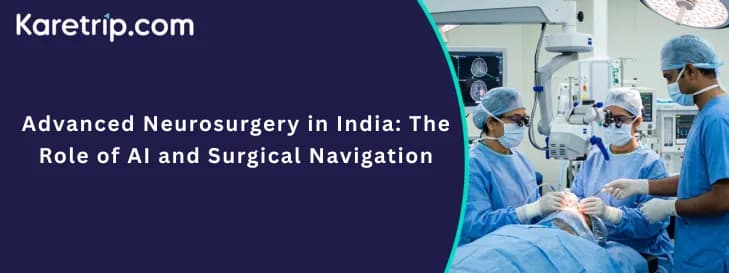

Navigating a complex neurological diagnosis like a brain tumor, vascular malformation, or deep spine condition can feel daunting for patients and their families. Over the past decade, advanced neurosurgery in India has undergone a massive technological transformation, establishing the country as an elite international destination for complex cranial and spinal care. Modern operating suites across India are no longer reliant solely on traditional surgical techniques; instead, they integrate artificial intelligence (AI), intraoperative navigation systems, functional MRI mapping, and robotic assistance. These advancements allow neurosurgeons to achieve millimeter-level precision, minimize damage to delicate neural pathways, and dramatically improve patient outcomes.
This detailed guide explores how AI and real-time surgical navigation are redefining neurological care in India, helping you understand the latest innovations, premier treatment centers, and how to seamlessly navigate your surgical journey.
The Evolution of Advanced Neurosurgery in India
India's neurosurgical capabilities have transitioned from standard open procedures to highly precise, technology-driven interventions. Here is how continuous technological adoption has reshaped neurological treatment standards across the nation.
From Traditional Craniotomies to Micro-Neurosurgery
Historically, brain and spine surgeries involved large surgical incisions and broad surgical exposure to locate and treat neurological lesions. While effective, traditional craniotomies often carried higher risks of tissue trauma, prolonged recovery times, and potential damage to adjacent healthy brain tissue. The introduction of high-magnification surgical microscopes marked the first major evolution, allowing neurosurgeons to operate near delicate nerves and blood vessels with greater clarity.
The Shift Toward AI-Powered Precision and Minimal Invasiveness
Today, neurosurgery has entered the digital age. The integration of advanced computational power, digital imaging, and artificial intelligence has elevated standard microsurgery into keyhole, minimally invasive procedures. Surgeons can now model a patient's unique cerebral anatomy prior to making a single incision, transforming high-risk procedures into predictable, safe, and effective treatments.
Key Technological Pillars: AI, Robotics, and Surgical Navigation
Modern neurosurgical suites rely on a triad of advanced innovations to ensure maximum surgical efficacy and patient safety. Discover how these technologies work together inside the operating theater.
Artificial Intelligence in Pre-Operative Planning and Diagnostics
Artificial intelligence algorithms are revolutionary tools for diagnostic neuro-imaging. By processing thousands of high-resolution MRI, PET, and CT image slices, AI systems help neurosurgeons differentiate between healthy brain tissue, edema (swelling), and malignant tumor borders. Furthermore, AI-driven tractography maps white matter tracts the highway of nerve fibers responsible for speech, movement, and vision allowing surgeons to plan a surgical trajectory that entirely avoids critical functional zones.
Real-Time Neuronavigation and Intraoperative MRI (iMRI)
Neuronavigation acts like a satellite navigation system for the brain. Using optical trackers and infrared cameras, the system links the patient’s real-time physical anatomy on the operating table directly to their 3D digital scans on a monitor. Additionally, top-tier centers deploy Intraoperative MRI (iMRI) suites. An iMRI allows surgeons to scan the patient's brain during the procedure, confirming that a tumor has been completely removed before finishing the operation.
Robotic-Assisted Brain and Spine Surgery
Surgical robotics bring unmatched mechanical stability and micro-precision to complex neurosurgical cases. Robotic arms assist in placing deep brain stimulation (DBS) electrodes for Parkinson’s disease or positioning pedicle screws during complex spinal reconstructions. By eliminating human micro-tremors and working seamlessly with 3D navigation guidance, robotic systems minimize surgical time and reduce tissue disruption.


Major Neurological Conditions Benefiting from Advanced Technology
Advanced surgical technology significantly improves surgical success rates and preservation of neurological function across complex conditions. These are the primary medical cases transformed by these digital tools.
Complex Brain Tumor Resection and Skull Base Surgery
Treating deep-seated glioblastomas, meningiomas, and acoustic neuromas requires extreme accuracy. By combining fluorescence-guided surgery (where tumors glow under specialized light) with real-time neuronavigation, neurosurgeons can maximize tumor removal while preserving crucial cognitive and motor functions.
Deep Brain Stimulation (DBS) for Movement Disorders
For patients with advanced Parkinson’s disease, essential tremor, or dystonia, Deep Brain Stimulation offers life-changing relief. Guided by AI-assisted micro-electrode recording and stereotactic navigation, surgeons implant tiny electrodes into deep brain nuclei with sub-millimeter precision, successfully regulating abnormal electrical signals.
Minimally Invasive Spine Procedures and Decompression
Spinal neurosurgery has been transformed by navigation and endoscopic techniques. Conditions such as herniated discs, spinal stenosis, and complex vertebral deformities are now routinely treated through microscopic incisions, preserving muscle attachment points and enabling rapid patient mobility.
Premier Centers for Advanced Neurosurgery in India
Leading line: Selecting an accredited facility with specialized neurosurgical infrastructure is vital for complex cranial and spinal interventions. India houses several globally recognized neuroscience institutes equipped with state-of-the-art technology.
Global Centre of Excellence in Neurosciences at Aster Medcity, Kochi
Located in Kerala, the Global Centre of Excellence in Neurosciences at Aster Medcity is recognized as a premier destination for advanced neurocare. The center features advanced neuro-suite technology, dedicated neuro-ICUs, and high-precision flat-panel biplane catheter labs for neuro-interventional procedures. Supported by renowned neurosurgeons, Aster Medcity excels in performing complex brain tumor resections, pediatric neurosurgery, and advanced stroke care.
Leading Metropolitan Neurosurgical Facilities Across India
Beyond Kochi, metropolitan hubs such as Delhi NCR, Bengaluru, Mumbai, and Chennai host leading healthcare networks equipped with intraoperative MRIs, Gamma Knife radiosurgery units, and CyberKnife systems. These institutions adhere to strict international standards (JCI and NABH), offering world-class outcomes at a fraction of Western treatment costs.
Simplifying Your Neurosurgical Journey with Karetrip
Arranging specialized brain or spine surgery in an unfamiliar city requires meticulous planning, medical evaluation, and travel coordination. Here is how our clinical concierge platform guides you every step of the way.
Access to Top Neurosurgeons and Transparent Costing
Navigating complex medical options requires reliable expertise. Karetrip connects you directly with leading board-certified neurosurgeons at JCI and NABH-accredited hospitals in India. We facilitate expert second opinions, review digital MRI/CT scans remotely, and provide clear, all-inclusive cost estimates prior to your travel.
Comprehensive Medical Concierge and Post-Surgical Support
Karetrip manages every administrative detail of your medical travel, including visa invitation letters, priority hospital bookings, dedicated airport transfers, and comfortable local accommodation for your family. Once discharged, we coordinate long-term virtual follow-ups with your operating surgeon, ensuring complete continuity of care.
Chat with our Medical care assistant, RUA, for quick guidance and support
Medical Disclaimer
This content is intended strictly for educational and informational purposes and does not constitute medical advice. Always consult a qualified neurosurgeon for professional diagnosis and clinical recommendations tailored to your specific condition.