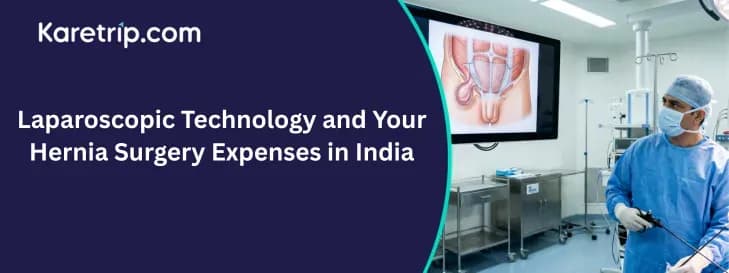

A hernia is more than just a physical protrusion; it is a structural failure that interrupts your daily life. Whether it is an inguinal, umbilical, or incisional hernia, the constant discomfort and the risk of "strangulation" make surgical repair a clinical priority.
Historically, hernia repair meant a large, painful incision through the abdominal wall, a multi-day hospital stay, and weeks, if not months, of restricted movement. Today, that paradigm has been replaced by Laparoscopic Technology. By using high-definition cameras and miniaturized instruments, surgeons can repair the abdominal wall from the inside out through incisions no larger than a buttonhole.
For international patients travelling to India, the focus isn't just on finding the lowest price; it’s about securing the highest clinical value. Why pay for a cheaper open surgery if it keeps you out of work for an extra month?
The Clinical Value: Why Laparoscopy is the Gold Standard
When you evaluate hernia surgery, you are comparing two very different surgical philosophies.
Traditional Open Surgery
The surgeon makes a 5 to 10-cm incision, pushes the tissue back, and sews a mesh over the hole.
-
The Cost: Lower upfront hospital bill.
-
The Reality: Higher post-operative pain, greater risk of wound infection, and a 4 to 6-week recovery period.
Laparoscopic (Minimally Invasive) Repair
The surgeon makes three tiny incisions (5–10 mm). A laparoscope (HD camera) allows the surgeon to visualise the defect with extreme clarity, placing the mesh behind the muscle wall for a stronger repair.
-
The Clinical Benefit: Significantly less trauma to the abdominal muscles, minimal scarring, and a drastically lower risk of infection.
-
The Value: Most patients are discharged within 24 hours and can return to light office work within 5 to 7 days.
Decoding the Expenses: Itemised Costs in INR
In India, laparoscopic hernia surgery provides elite-level technology at a price point that is accessible for international travellers. However, the final expense is dictated by the complexity of the hernia and the materials used.
| Component | Estimated Cost (INR) |
|---|---|
| Bilateral/Unilateral Laparoscopic Package | ₹80,000 – ₹1,60,000 |
| Surgical Mesh (Standard Synthetic) | ₹10,000 – ₹25,000 |
| Specialised Mesh (Self-Fixating / 3D) | ₹30,000 – ₹60,000 |
| Hospital Stay (1-2 Days Twin Sharing/Private) | ₹15,000 – ₹35,000 |
The "Mesh" Factor
The mesh is the permanent reinforcement for your abdominal wall. Elite Indian surgeons often recommend "3D" or "Contoured" meshes that fit the natural shape of the groin. While these add to the initial expense, they significantly reduce the risk of the hernia recurring, providing better long-term value for your money.


The Logistical Shield: Ensuring a Safe Recovery
Because laparoscopic surgery is minimally invasive, many patients make the mistake of thinking they can fly home 48 hours later. This is a logistical hazard. To prevent blood clots (DVT) and ensure the internal mesh has stabilized, you must remain in India for 7 to 10 days post-discharge.
The Problem with Hotels
Recovering in a standard hotel is unsafe for even "minor" surgeries:
-
The Diet Hazard: High-sodium hotel food causes bloating and constipation. After abdominal surgery, straining during a bowel movement can put dangerous pressure on your new mesh.
-
The Hygiene Gap: Shared ventilation and hotel linens increase the risk of surface infections.
The karetrip Solution
We solve the "post-op gap" by engineering a protective recovery ecosystem:
-
Kitchen-Equipped Apartments: We transition you into a private, sanitized apartment. This allows your family to prepare a high-fiber, low-sodium diet that prevents constipation and supports tissue healing.
-
VIP Transport: We provide private, smooth-suspension vehicles for your follow-up appointments, bypassing the physical stress of public transit.
Conclusion: Investing in a Faster Return to Life
Evaluating the cost of hernia surgery in India requires looking past the hospital receipt. The "expense" of a surgery includes the time you lose while recovering. Laparoscopic technology, combined with India’s elite surgical expertise, offers the highest return on investment: less pain, a stronger repair, and a faster return to your career and family.
By partnering with karetrip, you ensure that this technological advantage is backed by a flawless logistical plan. We handle the medical visas, the remote surgical reviews, and the sanitized, kitchen-equipped housing you need to heal.
Ready to fix your hernia with the best technology available?
Chat with Rua, our dedicated care coordinator. Securely upload your ultrasound or clinical reports today, and karetrip will organize a priority remote consultation with India's leading laparoscopic surgeons.
Medical Disclaimer
The financial estimates and clinical timelines provided are for educational purposes and do not substitute for professional medical advice. Hernia surgery carries risks such as recurrence, nerve injury, or infection. Final billing depends on the type of hernia and the surgeon's assessment. Always consult a board-certified Laparoscopic Surgeon to determine your eligibility.