
Receiving a brain tumour diagnosis is a moment that brings life to an absolute standstill. For the patient and their family, the immediate shock is almost always followed by a profound fear of the treatment itself. Historically, removing a tumour from the brain meant undergoing a craniotomy, a highly invasive open-skull surgery requiring general anesthesia, days spent in a surgical intensive care unit, and weeks or even months of exhausting neurological rehabilitation. The anxiety surrounding potential cognitive damage, personality changes, or loss of motor function can be as paralysing as the disease itself.
However, the landscape of neuro-oncology has undergone a miraculous transformation. What if you could eradicate a complex brain tumor without a single incision, without a drop of blood shed, and without spending a single night in a hospital bed?
For patients traveling from the Middle East, Africa, and South Asia, this is no longer science fiction; it is the clinical reality available today at India’s most advanced medical institutions. India has firmly established itself as a global epicenter for robotic radiosurgery, housing technologies that are unavailable in many Western nations.
At Karetrip, our mission is to connect international patients to these life-saving, pain-free technologies. We remove the friction of cross-border medical travel so you can focus entirely on your healing. Here is your comprehensive 2026 guide to understanding the revolutionary advancements in non-invasive brain tumour treatments, how the science works, and why travelling to India might be the best decision for your neurological health.
1. The Clinical Shift: Why Non-Invasive is the Future of Neurosurgery
To appreciate the magnitude of these new treatments, it is essential to understand the limitations of traditional brain surgery. The human brain is an incredibly densely packed network of billions of neurons. Every millimetre controls a critical function—your ability to speak, to remember your childhood, or to move your hands. When a surgeon opens the skull to physically cut out a tumor, navigating around these delicate, healthy structures is a monumental challenge. Furthermore, the risk of post-operative infection in open brain surgery is a constant threat.
The modern clinical shift is toward Stereotactic Radiosurgery (SRS). Despite the word "surgery" in its name, SRS involves absolutely no cutting. Instead, it uses highly concentrated, meticulously focused beams of ionizing radiation.
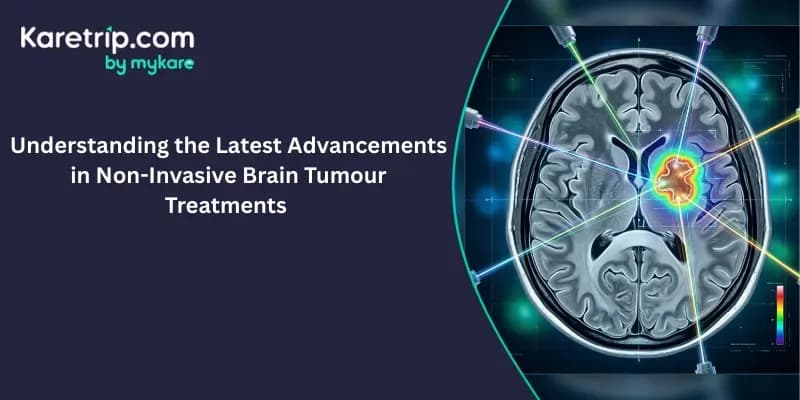
Think of it like using a magnifying glass to focus sunlight on a single dry leaf. A single, weak beam of radiation passes through the healthy brain tissue without causing harm. However, when hundreds of these weak beams are fired from different angles so that they all intersect at one exact point—the tumor—the combined energy is lethal to the cancer cells. This intersecting precision destroys the DNA of the tumor, causing it to shrink and die over time, while completely preserving the healthy brain tissue immediately surrounding it.
In 2026, the technology delivering these beams has reached an unprecedented level of sub-millimetric accuracy.
2. ZAP-X Gyroscopic Radiosurgery: The 2026 Benchmark
The most groundbreaking addition to South Asia’s neurosurgical arsenal is the ZAP-X® Gyroscopic Radiosurgery® platform. Recently installed at elite centers like Indraprastha Apollo Hospitals in New Delhi and AIG Hospitals in Hyderabad, the ZAP-X system is rewriting the rules of outpatient tumor treatment.
How ZAP-X Changes the Patient Experience:
- Gyroscopic Mobility: Traditional radiation machines move in limited circular patterns. The ZAP-X system uses a first-of-its-kind gyroscopic design. The linear accelerator (the part of the machine that generates the radiation) rotates around the patient's head from thousands of different potential angles. This massive range of motion allows doctors to shape the radiation dose to perfectly match the irregular, 3D contours of the tumor.
- Vault-Free Comfort: Older radiation machines required patients to be placed in heavy, claustrophobic, concrete-shielded bunkers to prevent radiation leakage. ZAP-X is entirely self-shielded. Patients receive treatment in a bright, open room, often looking out a window or listening to their favorite music, which drastically reduces the intense claustrophobia many brain tumor patients experience.
- The 30-Minute Miracle: What used to require a 6-hour open surgery is now completed in a single, 30-to-45-minute outpatient session. Patients simply lie back on the treatment table, allow the gyroscopic arm to move around them, and walk out of the hospital shortly after. There is no anesthesia required, and the patient can often return to their normal daily activities, such as having dinner with their family, on the exact same day.
3. CyberKnife S7 and the Power of Motion Tracking
While ZAP-X is a dedicated marvel for the brain, the CyberKnife S7 FIM System remains a titan of non-invasive oncology, highly sought after by international patients at centers like Apollo Cancer Centre Chennai.
CyberKnife utilises a compact linear accelerator mounted on a highly agile, industrial robotic arm. Its greatest clinical advantage is Synchrony® AI-Driven Motion Tracking.
Even when your head is secured in a comfortable mesh mask, your brain shifts microscopically when you breathe or swallow. The CyberKnife S7 constantly takes real-time X-rays during the procedure. If the tumour shifts by a fraction of a millimeter, the robotic arm instantly adjusts the aim of the radiation beam to match. This real-time tracking ensures that the high-dose radiation never accidentally strikes the healthy optic nerve, brainstem, or memory centres, offering a supreme safety net for patients with tumours situated in highly precarious locations.


4. Proton Beam Therapy: The "Bragg Peak" Advantage
For certain types of brain tumors, particularly pediatric brain tumors or lesions located dangerously close to the spine, Proton Beam Therapy is the ultimate non-invasive tool. Apollo Proton Cancer Centre in Chennai remains one of the only facilities in South Asia offering this technology. Unlike standard X-ray radiation (photons) which pass right through the body, protons are heavy particles. Medical physicists can program a proton beam to travel into the brain and stop exactly at a specific depth. This phenomenon is known as the "Bragg Peak." Because the proton beam stops entirely once it hits the tumor, there is zero "exit dose" of radiation. This means the healthy brain tissue sitting directly behind the tumor receives absolutely no radiation exposure. For a young child whose brain is still developing, avoiding unnecessary radiation is critical to preserving their lifelong IQ, growth hormones, and hearing.
5. Who is the Ideal Candidate for Non-Invasive Treatment?
It is important to understand that while non-invasive radiosurgery is revolutionary, it is not a universal cure for every brain tumour. A multidisciplinary Tumour Board must evaluate your specific case.
Conditions perfectly suited for Radiosurgery (ZAP-X, CyberKnife):
- Benign Tumours: Non-cancerous growths like Meningiomas, Acoustic Neuromas (Schwannomas), and Pituitary Adenomas respond incredibly well to radiosurgery, often halting growth permanently.
- Metastatic Brain Tumours: When cancer from the lungs, breasts, or colon spreads to the brain, it often creates multiple small tumours. Radiosurgery can target and destroy several of these metastases in a single session.
- Small to Medium Size: These technologies are generally most effective for well-defined tumours that are under 3 to 4 centimetres in diameter.
- Functional Disorders: Beyond tumors, radiosurgery is highly effective in treating Arteriovenous Malformations (AVMs—dangerous tangles of blood vessels) and Trigeminal Neuralgia (a condition causing severe, electric-shock-like facial pain).
6. Seamless Logistics & Healing with Karetrip
The technology exists, but accessing it from a foreign country while battling a neurological diagnosis is a daunting logistical puzzle. Karetrip serves as your dedicated medical concierge, ensuring you never have to navigate this complex system alone.
- Pre-Travel Clinical Review: Before you spend money on flights or visas, our AI agent, Rua, allows you to securely upload your latest MRI or PET-CT scans. We bypass standard hospital queues to get your files directly onto the desks of top neurosurgeons at Apollo or AIG for a priority Tumour Board review. You will know exactly which technology (ZAP-X, CyberKnife, or Proton) is best for you before you leave home.
- The 24-Hour Visa Fast-Track: Once your treatment is approved, we generate your mandatory Visa Invitation Letter from the treating hospital within 24 hours, ensuring your e-Medical Visa or IVAC application is processed without bureaucratic delays.
- A Sanctuary for Recovery: Non-invasive treatments do not require hospital ward stays, meaning you will recover in your accommodation. We book deeply sanitized, premium serviced apartments close to your chosen hospital. With private kitchens and dedicated language translators (Arabic, Bengali, French), we ensure your environment is stress-free, culturally familiar, and conducive to rapid healing.
Conclusion: Reclaim Your Peace of Mind
A brain tumor diagnosis is terrifying, but the treatment no longer has to be. By choosing to travel to India’s elite neuro-oncology centers, you are empowering yourself with the most sophisticated, non-invasive technology on the planet. You can effectively eliminate the tumor and return to your life, your family, and your career with your cognitive functions perfectly intact.
Are you ready to explore your non-invasive treatment options? Do not wait in fear. Chat with Rua. Securely upload your brain MRI or pathology reports today. Rua will instantly coordinate a comprehensive clinical review with India's leading neurosurgeons, provide a detailed technological treatment plan, and secure your urgent Visa Invitation Letter.
Medical Disclaimer The content provided in this blog is for informational purposes only. Non-invasive radiosurgery is a highly specialized medical procedure, and eligibility depends entirely on the tumor’s size, type, location, and the patient's overall health. Not all brain tumors can be treated without open surgery. KareTrip facilitates online clinical reviews, Tumour Board consultations, and travel logistics but does not provide direct medical advice. Always consult a certified neurosurgeon to determine the safest treatment pathway for your specific case.