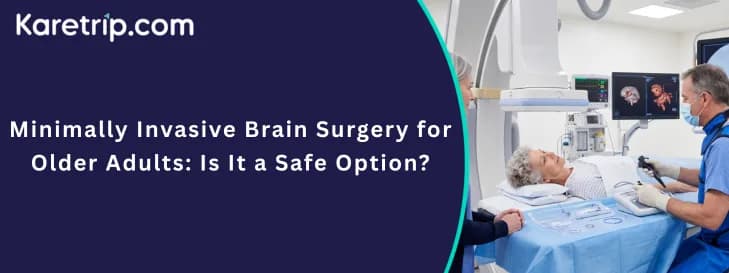

When an elderly parent or family member receives a neurological diagnosis, the initial reaction is often overwhelming fear. Traditional open brain surgery carries significant risks for older adults due to age-related frailty, heart conditions, or high blood pressure. However, medical technology has evolved dramatically over the last decade. Today, minimally invasive brain surgery offers a safer, highly effective alternative designed specifically to treat complex brain conditions while reducing physical trauma. By utilizing tiny keyholes, natural nasal pathways, and microscopic cameras, neurosurgeons can remove brain tumors or drain fluid with minimal disruption to surrounding tissue.
This guide answers key questions for senior patients and their adult children, exploring safety profiles, recovery timelines, and advanced surgical care options.
Understanding Minimally Invasive Brain Surgery in Geriatric Care
Modern neurosurgery prioritizes precision over large surgical exposure, making brain procedures feasible for elderly patients once considered high-risk. Advanced imaging and miniaturized instruments allow surgeons to access deep cranial structures safely.
How Keyhole and Endoscopic Techniques Work
Unlike traditional open craniotomies that require removing a large section of the skull, minimally invasive brain surgery relies on specialized corridors. Surgeons use eyebrow incisions, keyholes behind the ear, or the natural nasal passages (neuro-endoscopy) to reach the target area. High-definition endoscopes provide clear, magnified views of the brain, allowing precise removal of lesions without retracting healthy brain tissue.
Reduced Physical Stress and Lower Anesthesia Risks
For aging bodies, prolonged general anesthesia and severe physiological stress carry increased risks. Minimally invasive approaches significantly reduce operating room times and blood loss, minimizing cardiovascular strain. Additionally, because healthy brain tissue is not disturbed, elderly patients face a lower risk of post-operative cognitive dysfunction (delirium) or memory issues.
Key Conditions Treated in Seniors with Minimally Invasive Approaches
Many neurological conditions common in older populations can now be treated effectively without open brain surgery. Understanding these conditions helps families make informed clinical choices.
Pituitary Tumors and Endonasal Endoscopic Surgery
Pituitary adenomas can press on the optic nerves, leading to vision loss or hormonal imbalances in seniors. Using the Expanded Endonasal Approach (EEA), neurosurgeons pass thin endoscopic instruments through the nostrils to remove the tumor. This procedure leaves no visible facial scars, eliminates the need to cut through the skull, and allows patients to eat and walk within 24 to 48 hours.
Chronic Subdural Hematomas and Keyhole Evacuation
Elders are prone to chronic subdural hematomas gradual blood accumulation on the brain surface resulting from minor falls. A minimally invasive keyhole evacuation involves creating one or two tiny openings in the skull to drain the fluid, relieving brain pressure almost immediately while avoiding major surgical trauma.
Metastatic Brain Lesions and Trigeminal Neuralgia
Seniors managing secondary brain tumors or severe facial pain (trigeminal neuralgia) often benefit from keyhole micro-vascular decompression or stereotactic radiosurgery. These precise techniques target abnormal blood vessels or localized tumors while protecting delicate surrounding neural networks.
Evaluating Safety, Risks, and Candidacy in Elderly Patients
Age alone is no longer a disqualifier for life-saving brain surgery when procedures are tailored to individual health profiles. A detailed pre-operative evaluation ensures that the benefits of intervention outweigh potential risks.
Comprehensive Pre-Operative Assessment and Comorbidity Management
Before proceeding, a multidisciplinary team including neurosurgeons, cardiologists, and geriatricians evaluates the patient’s overall health. Chronic conditions such as diabetes, hypertension, or kidney disease are medically stabilized. Advanced 3D MRI and CT imaging map out the safest surgical path to protect functional speech and mobility centers.
Shorter Hospital Stays and Faster Functional Recovery
A major advantage of minimally invasive techniques for seniors is a shorter hospital stay. Older adults tend to decline physically when confined to hospital beds for long periods. With keyhole approaches, most patients are discharged within 2 to 4 days, allowing them to continue recovery in the comfort of their home or through structured physical rehabilitation.


Leading Neurosurgical Experts in India for Advanced Brain Care
When evaluating minimally invasive or complex brain interventions for older adults, treatment success depends heavily on the surgeon's specialized expertise. India is home to several internationally acclaimed neurosurgeons who specialize in geriatric neurology and advanced keyhole techniques:
Dr. Aditya Gupta
Max Super Speciality Hospital, Saket, New Delhi Neurosurgery & Stereotactic Radiosurgery Recognized as a pioneer in advanced stereotactic radiosurgery, deep brain stimulation, and minimally invasive brain tumor removal, with decades of experience handling complex geriatric cases.
Dr. Rana Patir
Fortis Memorial Research Institute, Gurugram Minimally Invasive Neurosurgery & Skull Base Surgery An internationally trained neurosurgeon specializing in endoscopic brain surgery, pediatric and geriatric brain tumor resections, and complex vascular neurosurgery.
Dr. B.K. Misra
P.D. Hinduja Hospital, Mumbai Microsurgery and Minimally Invasive Brain Surgery Celebrated globally as the first surgeon in South Asia to perform intraoperative MRI-guided neurosurgery and a pioneer in micro-neurosurgery for intracranial aneurysms and tumors.
Dr. Satish Rudrappa
Aster CMI Hospital, Bangalore Neuro-Spine & Minimally Invasive Neurosurgery A veteran neurosurgeon with extensive expertise in complex cranial procedures, minimally invasive corridors, and neuro-trauma management for aging populations.
Dr. (Prof.) V.P. Singh
Medanta – The Medicity, Gurugram Skull Base and Brain Tumor Microsurgery Former head of neurosurgery at AIIMS, Dr. Singh brings world-class precision to delicate brain tumor and pituitary surgeries, emphasizing tissue preservation and rapid functional recovery.
Navigating Senior Neurological Care with Karetrip
Managing specialized brain care for aging parents can be stressful, especially for adult children balancing family or living abroad. Karetrip acts as your dedicated advocate, ensuring high-quality medical support at every step.
Connecting Families with Accredited Neurosurgical Excellence
Navigating neurological care requires working with experienced, board-certified specialists. Karetrip connects patients with top-tier neurosurgeons and JCI/NABH-accredited hospitals in India, such as Aster Medcity in Kochi, which feature dedicated neuro-ICUs and advanced surgical suites. We facilitate remote reviews of MRI/CT scans so you receive clear medical guidance before making travel plans.
Full Concierge Support for Long-Distance Caregivers
From organizing priority consultations to coordinating local transportation, wheelchair assistance, and hospital bystander support, Karetrip simplifies care logistics. Families receive regular updates, ensuring complete visibility and peace of mind throughout the treatment journey.
Chat with our Medical care assistant, RUA, for quick guidance and support.
Medical Disclaimer
This content is for educational and informational purposes only and does not constitute formal medical advice. Always consult a qualified neurosurgeon or healthcare provider for diagnosis and treatment plans tailored to an individual patient's health status.