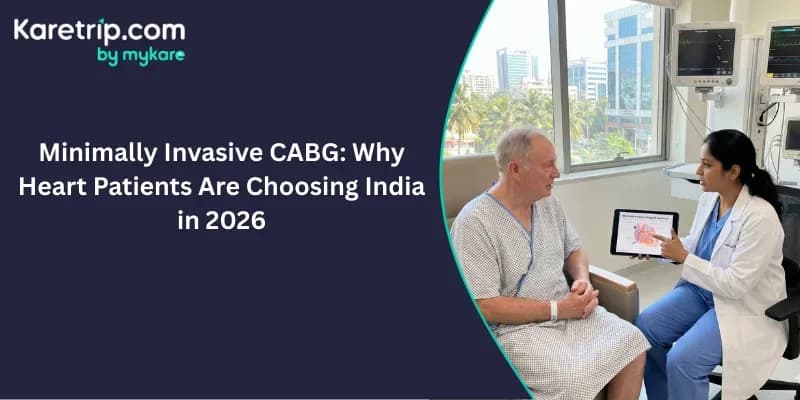

Heart bypass surgery has advanced significantly in recent years. In 2026, more patients are choosing Minimally Invasive CABG (Coronary Artery Bypass Grafting) instead of traditional open-heart surgery in selected cases.
For international patients, India has become a leading destination for this advanced procedure.
Considering minimally invasive heart bypass surgery in India? Ask RUA for hospital options, surgeon profiles, and estimated costs.
What Is Minimally Invasive CABG?
Traditional bypass surgery typically requires:
- A large chest incision
- Cutting through the breastbone (sternotomy)
- Longer recovery time
Minimally Invasive CABG is different.
It may involve:
- Small chest incisions
- Avoiding full breastbone division in selected patients
- Specialized surgical instruments
- Potentially faster rehabilitation
It is often referred to as minimally invasive or keyhole heart bypass surgery, though specific techniques vary depending on the patient’s anatomy and disease pattern.
Who Is a Candidate for Minimally Invasive CABG?
This procedure may be suitable for patients with:
- Single or double vessel coronary artery disease
- Good overall heart function
- No complex or diffuse blockages requiring full sternotomy
However, not all patients qualify.
A cardiac surgeon determines suitability after coronary angiography, cardiac imaging, and comprehensive evaluation.
Patients with multi-vessel disease, severe calcification, or other cardiac conditions may be better suited for conventional CABG.
Not sure if you qualify? Ask RUA for an eligibility review.
Benefits of Minimally Invasive CABG
Patients may choose this approach because of:
- Smaller surgical scars
- Potentially reduced blood loss
- Lower risk of certain wound complications
- Shorter hospital stay in selected cases
- Faster return to daily activities for some patients
- Less post-operative discomfort
Recovery timelines vary depending on age, overall health, and surgical complexity. No surgical approach guarantees complication-free recovery.


Why Heart Patients Are Choosing India in 2026
India has become a preferred destination for minimally invasive heart surgery because of:
Experienced Cardiac Surgeons
India performs a high volume of bypass surgeries annually, including minimally invasive techniques in specialized centers.
Advanced Cardiac Centers
Leading hospitals are equipped with:
- Hybrid operation theatres
- Advanced cardiac imaging
- Dedicated cardiac ICUs
- Multidisciplinary cardiac teams
Affordable Treatment Cost
Minimally invasive CABG in India is generally more affordable compared to many Western countries, while maintaining internationally accepted standards in accredited hospitals.
Short Waiting Time
Once evaluation is complete and medical clearance is obtained, surgery can often be scheduled promptly, depending on hospital availability and patient condition.
Estimated Cost of Minimally Invasive CABG in India
While costs vary by hospital, city, and patient condition, the approximate range is:
₹3.5 lakhs – ₹6.5 lakhs
Final cost depends on:
- Number of bypass grafts
- ICU duration
- Pre-existing medical conditions
- Hospital category and room type
- Unexpected complications (if any)
A detailed estimate is provided only after clinical evaluation.
Want a hospital-wise cost estimate? Ask RUA for details.
Recovery Timeline After Minimally Invasive CABG
Typical recovery may include:
- Hospital stay: 4–6 days (if stable)
- Early mobilization: within a few days
- Travel clearance: usually 2–3 weeks (case-dependent and subject to surgeon approval)
- Full recovery: approximately 6–12 weeks
Recovery is often faster compared to traditional full sternotomy, but individual healing times vary.
Why International Patients Trust India
Patients from Oman, Bangladesh, Kenya, Mauritius, and the Middle East choose India because of:
- High procedural volumes in major cardiac centers
- International patient support teams
- English-speaking medical staff
- Structured treatment planning and coordination
Surgical outcomes depend on patient health status, surgeon expertise, and hospital infrastructure.
How Karetrip Supports Heart Patients
At karetrip.com, we help patients plan minimally invasive CABG with structured coordination.
We assist with:
- Hospital shortlisting
- Surgeon profile comparison
- Cost transparency (subject to hospital assessment)
- Medical visa coordination
- Travel and recovery planning
All final medical decisions, surgical recommendations, and risk discussions are conducted directly by licensed cardiac surgeons.
Medical Disclaimer This content is for general information only and does not replace professional medical advice, diagnosis, or treatment. Surgical outcomes vary based on individual medical condition, disease severity, and overall health. Always consult a qualified cardiac surgeon for personalized evaluation and treatment recommendations.