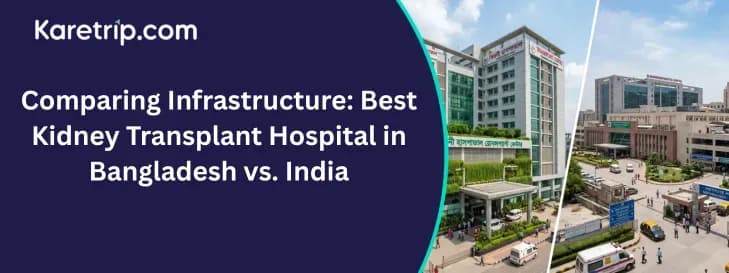

End-Stage Renal Disease (ESRD) is a diagnosis that stops time. While dialysis acts as a vital bridge, a kidney transplant is the only true pathway back to a normal, unrestrictive life. When families in Dhaka, Chittagong, or Sylhet face this reality, they are immediately confronted with a monumental decision: Should we undergo the transplant locally in Bangladesh, or travel to a major medical hub in India?
Historically, patients evaluating this choice focused entirely on the surgeon's reputation. However, a modern kidney transplant involves two simultaneous surgeries (the donor and the recipient) and weeks of severe immunosuppression. Therefore, the success of the procedure relies heavily on the hospital's invisible architecture: air filtration systems, blood bank capabilities, robotic surgical arms, and dedicated intensive care units.
While Bangladesh has made significant strides in nephrology, the infrastructure required for high-acuity, complex renal transplants, especially for international patients, is vastly different between the two nations.
The Donor's Safety: Surgical Technology
A kidney transplant is unique in medicine because it involves operating on a perfectly healthy person: the living donor. The absolute priority is ensuring the donor's surgery is as minimally invasive as possible, allowing them to return to their normal life rapidly.
The Infrastructure in Bangladesh
Top corporate hospitals and government institutes in Dhaka regularly perform living donor nephrectomies.
- The Approach: The standard of care locally is predominantly open surgery or standard laparoscopic surgery. While safe, these methods can result in larger incisions, longer hospital stays for the donor, and a more painful recovery process, which can be daunting for family members volunteering to donate.
The Infrastructure in India
Elite, JCI-accredited transplant centers in India (such as Apollo, Medanta, and Gleneagles) have transitioned to highly advanced surgical platforms.
- Robotic-Assisted Donor Nephrectomy: India is a global leader in utilizing the Da Vinci Xi Robotic System for organ extraction. The surgeon controls robotic arms with sub-millimeter precision through tiny keyhole incisions.
- The Outcome: For the donor, robotic surgery means minimal blood loss, significantly less post-operative pain, and discharge from the hospital often within 2 to 3 days. The pristine extraction also ensures the kidney is in optimal condition before it is transplanted into the recipient.
The Biological Fortress: Transplant ICUs
The actual surgery takes a few hours, but the recipient’s immediate post-operative recovery dictates the long-term survival of the new kidney. To prevent the body from rejecting the new organ, the patient is given powerful immunosuppressant drugs, effectively reducing their immune system to zero.
The Infrastructure in Bangladesh
- The Risk of General ICUs: In many local facilities, post-transplant patients are often placed in high-dependency units or general ICUs. Sharing an intensive care space with patients suffering from respiratory infections or open wounds poses a severe biological threat to an immunosuppressed kidney recipient.
The Infrastructure in India
-
Dedicated Transplant ICUs: Apex Indian hospitals operate strictly isolated Transplant Intensive Care Units. These wards are engineered with Positive Pressure Ventilation and HEPA filtration. When the ICU door opens, air blows outward, preventing hospital-borne pathogens from entering the room.
-
1:1 Barrier Nursing: Indian transplant protocols mandate dedicated 1:1 nursing ratios in the ICU. These nurses are specialized exclusively in renal care, trained to spot microscopic fluctuations in urine output or creatinine levels before they escalate into a rejection crisis.


Handling the Impossible: Complex Clinical Capabilities
What happens if a willing family donor does not have a matching blood type with the patient?
The Infrastructure in Bangladesh
- The Barrier: If the donor and recipient are ABO incompatible (different blood groups), standard transplant protocols in Bangladesh generally dictate that the surgery cannot proceed. The patient is often forced back onto dialysis to wait indefinitely for a matched deceased donor or a different living donor.
The Infrastructure in India
-
ABO Incompatible Transplants: India’s medical infrastructure includes highly advanced blood banks and apheresis units capable of performing ABO Incompatible Transplants.
-
The Process: Before the surgery, the recipient undergoes a process called plasmapheresis, which filters the incompatible antibodies out of their blood, combined with specialized targeted therapies. This massive infrastructural advantage means Indian centers can successfully transplant kidneys across different blood groups, dramatically expanding the pool of potential donors for international families.
The Logistical Shield: Securing the Outpatient Phase
The most critical, and often overlooked, phase of a kidney transplant occurs after discharge from the hospital. A kidney recipient must stay near the treating hospital for 4 to 6 weeks for rigorous outpatient monitoring, daily blood tests, and ultrasound checks to ensure the organ is functioning perfectly. This is where the traditional "do-it-yourself" medical tourism model breaks down. Recovering in a foreign city is logistically terrifying, and staying in a standard commercial hotel exposes the patient to severe infection risks and dietary hazards.
The karetrip Logistical Ecosystem
We engineer a protective bubble around our patients from the moment they leave Bangladesh until they are medically cleared to fly home.
-
Remote Clinical Locking: Before you ever apply for a visa, karetrip securely uploads your diagnostic reports (and your potential donor's reports) for a Remote Nephrology Board Review in India. We secure your clinical roadmap and confirm legal eligibility beforehand.
-
Fast-Track VIL & Visas: We instantly generate the official Visa Invitation Letter (VIL) from the Indian hospital, prioritizing your Medical Visas at the IVAC in Dhaka or Chittagong.
-
The Private Kitchen Sanctuary: This is our most vital intervention. We strictly bypass commercial hotels. karetrip transitions the recipient and donor into premium, sanitized serviced apartments featuring fully equipped private kitchens.
-
The Renal Diet: Post-transplant patients must adhere to a strict, highly hygienic renal diet (controlled sodium, potassium, and sterile preparation). A private kitchen empowers your family to cook familiar Bengali meals safely, entirely eliminating the biological hazards of hotel room service.
-
Sterilized Ground Transfers: We provide spacious, private vehicles for your daily hospital follow-ups, ensuring you never have to navigate crowded Indian public transport while your immune system is compromised.
Conclusion: Choosing Engineered Safety
A kidney transplant is not merely a surgical procedure; it is a complex, multi-week biological orchestration. While local care in Bangladesh is continually improving, the technological and infrastructural gap remains significant when dealing with high-stakes renal failure.
By choosing an elite, JCI-accredited transplant center in India, patients gain access to robotic donor safety, HEPA-filtered intensive care, and the ability to execute complex, incompatible blood-type transplants.
More importantly, by partnering with karetrip, families eliminate the profound logistical anxieties of cross-border healthcare. We provide the clinical validation, the fast-tracked visas, and the sanitized, kitchen-equipped housing required to protect your new kidney during the most vulnerable weeks of your life.
Are you evaluating transplant options for yourself or a family member?
Do not navigate this complex infrastructure alone. Chat with Rua, our dedicated patient care coordinator. Securely upload your nephrology reports today, and let karetrip orchestrate a safe, seamless pathway to your recovery.
Medical Disclaimer
The insights provided in this article are intended strictly for educational, infrastructural comparison, and logistical planning purposes and do not substitute for professional medical counsel. A kidney transplant is a highly complex, life-altering procedure carrying inherent, severe risks including organ rejection and infection. karetrip serves as an independent medical facilitation platform, organizing secure data transfers, priority specialist consultations, and travel logistics exclusively with verified JCI/NABH-accredited institutions, but does not provide direct medical treatment. Always consult directly with a board-certified nephrologist regarding your clinical viability for transplantation.