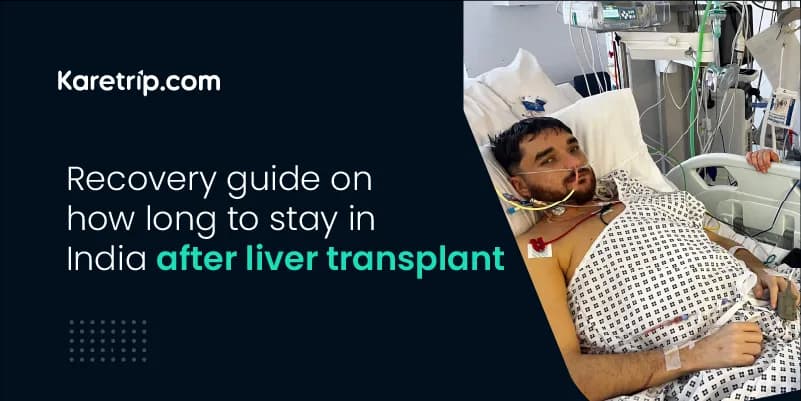

Most complications after a liver transplant do not happen in the operating room, they happen during recovery, often within the first few weeks. That is why doctors recommend international patients stay in India for at least 4-6 weeks for close monitoring and follow-ups.
If you are planning treatment, understanding this timeline is essential for safe travel, cost planning, and continuity of care. In this guide, you will learn the exact stay duration, recovery phases, and key factors that determine when you can return home safely.
What Is the Recommended Stay in India After a Liver Transplant?
Your stay in India after a liver transplantion is carefully structured around recovery milestones, complication monitoring, and medical clearance for travel. In most cases, doctors recommend a minimum stay of 4 to 6 weeks, but this is not a fixed number, it depends on how your body responds after surgery.
Here is why a carefully planned stay after a liver transplant is essential for a safe and stable recovery:
- High risk of rejection in early weeks: Your immune system may react to the new liver, especially within the first month. This requires close monitoring and quick medication adjustments.
- Frequent blood tests and scans: You may need tests every few days initially to track liver function and detect infections early.
- Immunosuppressant dose stabilisation: These medications are critical but highly individualised. Doctors adjust doses multiple times before stabilising them.
- Infection risk management: Your immunity is low after surgery, making early weeks critical for avoiding complications.
However, to make this easier for you, here’s a liver transplant recovery stay timeline in India for patients:
| Recovery Phase | Duration | What Happens in This Stage | Why It Matters |
|---|---|---|---|
| ICU Stay | Day 1–7 | Continuous monitoring of vital signs, liver function, and bleeding risks | Detects early complications immediately after surgery |
| Hospital Recovery | Week 2–3 | Mobility starts, nutrition support, immunosuppressant adjustment | Stabilises your body before discharge |
| Post-Discharge Stay (Near Hospital) | Week 4–8 | Frequent blood tests (every 3–5 days initially), doctor consultations, medication fine-tuning | Critical for detecting rejection and infections early |
| Extended Monitoring (if needed) | Up to 10–12 weeks | Ongoing observation for patients with complications or slower recovery | Ensures safe recovery before long-distance travel |
Even with a standard recovery timeline, your actual stay can vary. What really decides your duration is how your body responds after surgery and how stable your recovery is in those first few critical weeks.
Key Factors That Decide How Long You Should Stay
Your stay is not fixed, it is clinically personalised based on continuous medical evaluation. Doctors monitor your recovery closely and only clear you for travel once key health parameters are stable. Nevertheless, key factors that influence your stay duration are:
- Your pre-transplant health condition: If you had advanced liver disease, malnutrition, or weakness before surgery, your body may take longer to recover. This often means extended monitoring and a longer stay.
- Type of liver transplant performed: Recovery can differ between living donor and deceased donor transplants. Some cases involve more complex surgery, which can impact how quickly you stabilise.
- Early post-surgery complications: Issues such as infections, bile leaks, bleeding, or delayed wound healing can extend your stay. These require immediate medical attention and cannot be managed remotely.
- Liver function stabilisation: Doctors regularly check your liver enzymes, bilirubin levels, and clotting profile. You can only travel once these values remain stable over multiple tests.
- Response to immunosuppressant medications: These medicines prevent organ rejection but require careful dose adjustments. Your stay continues until your body responds well and the dosage is stabilised.
- Infection risk and control: Your immune system is intentionally weakened after a transplant. Even minor infections can delay recovery and require you to stay longer for treatment.
- Doctor’s fit-to-fly assessment: You will only be cleared to travel once your doctor confirms that you are physically stable, mobile, and able to handle long-distance travel safely.
- Travel distance and medical support in your home country: If you are travelling far or have limited access to transplant care back home, doctors may advise a longer stay to reduce risk after discharge.
Also Read: What Are the Long-Term Lifestyle Changes After Liver Transplant? (2026 Guide)
As your recovery progresses, the focus shifts to identifying the right time for a safe and medically approved return home.
When Is It Safe for You to Travel Back Home?
In most cases, you can travel back home around 4 to 6 weeks after a liver transplant, but only if your recovery is medically stable. Your doctor will not rely on a fixed timeline, they will assess whether your body is ready to handle long-distance travel, infection exposure, and limited medical access during transit.
Medical conditions you must meet before travelling home are:
- Stable liver function over multiple tests: Your liver enzymes (ALT, AST), bilirubin, and clotting levels must remain stable across consecutive reports, not just improve once.
- No signs of rejection or active infection: Even mild symptoms such as fever, fatigue, or abnormal lab results can delay your travel.
- Immunosuppressant doses are stabilised: Your medication regimen should be consistent, with no frequent changes required.
- Surgical wound has healed adequately: Your incision site should show no signs of infection, swelling, or delayed healing.
- You are physically fit for travel: You should be able to:
- Sit comfortably for long hours
- Walk short distances without support
- Maintain hydration and nutrition during travel
- You receive a fit-to-fly certificate: This is a mandatory medical clearance confirming that you are safe to travel internationally.
Also Read: Affordable Liver Transplant Packages in India for Bangladeshi Families
As you return home, your recovery does not end, it enters a long-term phase where consistent care and discipline become essential to protect your new liver.


Life After Returning Home: Post Liver Transplant Care and Recovery
Once you are back in your home country, your focus shifts from hospital-based recovery to long-term maintenance and monitoring. This phase is critical because even small gaps in care can lead to complications.
In the first few months, your recovery is closely tracked through:
- Regular blood tests (every 1–2 weeks initially) to monitor liver function, infection markers, and medication impact
- Ongoing consultations with your transplant team (often online) along with visits to a local doctor
- Continuous medication review, especially for immunosuppressants
After you return home, your hospital in India will share a detailed discharge and follow-up plan with you. Your local doctor will continue routine monitoring based on this guidance, while your transplant specialist in India remains available for consultations if any complex issues arise.
To make this transition smoother, Karetrip ensures your care does not stop when you leave India. From sharing complete medical records to coordinating follow-ups with your treating hospital, you stay connected to the right experts throughout your recovery, so you can focus on healing with clarity and confidence.
Planning your return is important, but planning your entire stay in advance is what truly makes your recovery smoother, safer, and far less stressful.
Plan Your Liver Transplant Stay in India with Karetrip’s Expert Support
A liver transplant is not just a medical procedure, it is a time-sensitive journey that involves treatment, recovery, travel, and follow-up care. This is where structured planning becomes critical. Karetrip helps you plan your stay in a way that aligns with your medical timeline, recovery needs, and travel requirements, so you are not making decisions under pressure.
Here’s how Karetrip helps you plan your stay better:
- Clear recovery timeline: Get a personalised estimate of your hospital stay, post-discharge recovery, and total duration in India based on your medical reports.
- Right hospital and specialist access: Connect with experienced liver transplant teams across leading hospitals in major Indian cities.
- Cost clarity with Rua: Upload your reports to receive structured cost estimates covering treatment, stay, and travel, so you can plan without uncertainty.
- Stay and travel arrangements: Accommodation near your hospital is organised based on your recovery needs, comfort, and budget, along with complete travel support.
- Continuous care support: From visa assistance and airport pickup to post-treatment follow-ups, you remain supported at every stage, even after returning home.
If you are planning a liver transplant in India, taking the time to plan your stay properly can make a significant difference to your recovery.
Connect with Karetrip to get a clear treatment plan, estimated stay duration, and complete support throughout your journey, so you move forward with confidence, not uncertainty.
Final Thoughts
Your recovery after a liver transplant does not follow a fixed timeline; it depends on how well your body stabilises in those critical first few weeks.
While most patients need to stay in India for 4-6 weeks, what truly matters is completing the right follow-ups, monitoring, and medical checks before you travel.
Planning your stay carefully can reduce complications and support a smoother recovery. If you want a clear, personalised plan for your treatment, stay duration, and travel, Karetrip can guide you every step of the way with expert-backed support.