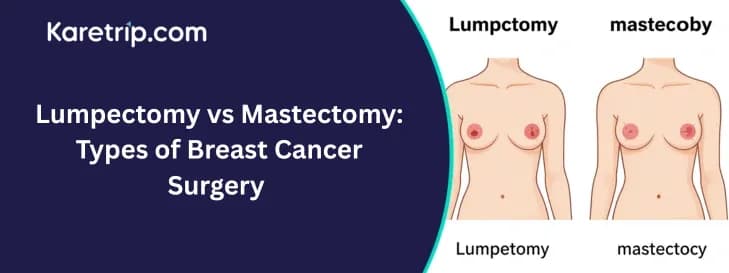

Breast cancer surgery remains one of the most effective treatment options for patients diagnosed with breast cancer. However, many patients feel overwhelmed when they hear terms such as lumpectomy, mastectomy, sentinel lymph node biopsy, or breast reconstruction. Understanding the differences between these procedures is important because the right surgical approach depends on factors such as cancer stage, tumor size, breast anatomy, genetic risk, and personal preferences. This guide explains the major types of breast cancer surgery how they differ, who may be eligible for each procedure, and what patients can expect before and after treatment.
Understanding Breast Cancer Surgery
Breast cancer surgery aims to remove cancerous tissue from the breast while achieving the best possible cancer control. Advances in surgical oncology have made breast cancer surgery more precise and personalized than ever before.
Today, surgeons focus not only on treating cancer but also on preserving appearance, reducing complications, and improving long-term quality of life. The type of surgery recommended varies depending on the patient's diagnosis, overall health, and treatment goals.
When Is Breast Cancer Surgery Recommended?
Breast cancer surgery is commonly recommended for patients with localized or early-stage disease. However, it may also play an important role in treating more advanced cancers as part of a broader treatment plan.
Doctors may recommend surgery when:
- Cancer is confined to the breast
- The tumor can be safely removed
- Cancer remains localized after chemotherapy
- There is a high risk of cancer progression
- Genetic testing suggests increased future cancer risk
- Preventive surgery is considered appropriate in selected cases
The final treatment plan is usually developed by a multidisciplinary team consisting of surgical oncologists, medical oncologists, radiation oncologists, radiologists, and pathologists.
| Feature | Lumpectomy | Mastectomy |
|---|---|---|
| Amount of Breast Removed | Only the tumor and a small margin of surrounding tissue are removed | The entire breast is removed |
| Breast Preservation | Most of the breast remains intact | The entire breast is removed |
| Radiation Therapy | Usually required after surgery | May or may not be required |
| Recovery Time | Generally shorter | Typically longer |
| Cosmetic Impact | Less significant impact on breast appearance | Greater impact unless breast reconstruction is performed |
| Suitable For | Smaller, localized tumors | Larger tumors or cancers involving multiple areas of the breast |
What Is a Lumpectomy?
A lumpectomy, also known as breast-conserving surgery, removes the tumor and a small margin of healthy tissue surrounding it while preserving most of the breast.
The goal is to eliminate cancer while maintaining the natural appearance of the breast whenever possible.
Who May Be a Candidate for Lumpectomy?
Patients may be eligible for lumpectomy if:
- The tumor is relatively small
- Cancer is confined to one area of the breast
- Adequate healthy tissue can be preserved
- Radiation therapy is possible afterward
- There are no contraindications to breast-conserving treatment
Many patients with early-stage breast cancer successfully undergo lumpectomy with excellent long-term outcomes.
Advantages of Lumpectomy
- Lumpectomy offers several potential benefits:
- Preserves most of the breast
- Shorter surgical recovery
- Less extensive surgery
- Often produces favorable cosmetic outcomes
- Comparable survival outcomes for many early-stage cancers
However, radiation therapy is usually required following the procedure.
What Is a Mastectomy?
A mastectomy involves removing the entire breast to eliminate cancerous tissue and reduce the risk of recurrence.
Although it is a more extensive procedure than lumpectomy, modern surgical techniques have significantly improved both safety and cosmetic outcomes.
When Is a Mastectomy Recommended?
Doctors may recommend mastectomy when:
- The tumor is large relative to breast size
- Multiple tumors are present
- Cancer has recurred after previous treatment
- Genetic mutations increase future cancer risk
- Radiation therapy is not suitable
- The patient prefers complete breast removal
Each case is evaluated individually to determine the most appropriate approach.
Advantages of Mastectomy
Potential advantages include:
- Removal of a larger amount of breast tissue
- Reduced risk of local recurrence in some situations
- May eliminate the need for radiation therapy in selected cases
- Appropriate for complex or extensive disease
Many patients also choose reconstruction to restore breast appearance following surgery.


Types of Mastectomy
Not all mastectomies are the same. Modern surgical oncology offers several approaches depending on the patient's condition and treatment goals.
Total (Simple) Mastectomy
This procedure removes the entire breast while preserving most nearby structures. It is commonly performed for early-stage breast cancer and preventive surgery.
Modified Radical Mastectomy
This surgery removes the breast along with selected lymph nodes under the arm. It is often recommended when lymph node involvement is suspected or confirmed.
Skin-Sparing Mastectomy
Most of the breast skin is preserved while the breast tissue is removed. This approach is frequently combined with immediate reconstruction.
Nipple-Sparing Mastectomy
The breast tissue is removed while preserving the skin and nipple in carefully selected patients. This option can provide improved cosmetic outcomes while maintaining cancer treatment goals.
Sentinel Lymph Node Biopsy
Breast cancer may spread through the lymphatic system, making lymph node evaluation an important part of treatment planning.
A sentinel lymph node biopsy involves removing and testing the first lymph nodes likely to receive cancer cells from the breast.
Benefits include:
- Accurate cancer staging
- Reduced need for extensive lymph node removal
- Lower risk of lymphedema
- Faster recovery
This procedure is commonly performed alongside breast cancer surgery.
Axillary Lymph Node Dissection
If cancer is found within the lymph nodes, additional lymph node removal may be recommended.
This procedure helps:
- Determine cancer spread
- Guide treatment planning
- Improve disease control
Although more extensive than sentinel node biopsy, it remains an important option for selected patients.
Breast Reconstruction Surgery
Many women choose breast reconstruction following mastectomy to restore breast shape and appearance. Reconstruction may be performed:
Immediate Reconstruction
Performed during the same operation as the mastectomy.
Benefits include:
- Fewer surgeries
- Earlier cosmetic restoration
- Reduced emotional impact
- Delayed Reconstruction
- Performed months or years after cancer treatment.
This option may be preferred when additional therapies such as radiation are planned.
Recovery After Breast Cancer Surgery
Recovery varies depending on the procedure performed, overall health, and whether reconstruction is included. Patients may experience:
- Temporary pain or discomfort
- Swelling
- Limited arm movement
- Fatigue
- Surgical drainage requirements
Most patients gradually return to normal activities over several weeks with appropriate rehabilitation and follow-up care.
Looking for the Best Hospital for Breast Cancer Treatment in India? Here's How Karetrip Can Help
International patients often face challenges related to hospital selection, specialist consultations, treatment planning, and travel arrangements. Karetrip helps simplify the process by providing personalized support throughout the treatment journey.
Karetrip assists patients with:
- Breast cancer specialist matching
- Medical report review
- Treatment planning guidance
- Cost estimation support
- Medical visa assistance
- Accommodation arrangements
- Airport transfers
- Follow-up consultation coordination
Personalized Support Through RUA
Patients can also connect with RUA through Karetrip for assistance with organizing medical records, understanding treatment options, scheduling appointments, and navigating their treatment journey more efficiently.
Conclusion
Both lumpectomy and mastectomy are highly effective breast cancer surgery options, and the best choice depends on the patient's specific diagnosis, treatment goals, and personal preferences. Advances in surgical techniques, reconstruction options, and multidisciplinary cancer care have significantly improved outcomes and quality of life for breast cancer patients.
With experienced oncologists, advanced surgical technologies, and internationally recognized hospitals, India continues to be a preferred destination for breast cancer treatment. Understanding the available surgical options can help patients make informed decisions and approach treatment with greater confidence.
Medical Disclaimer
The information provided in this article is intended for educational and informational purposes only and should not be considered medical advice, diagnosis, or treatment recommendations. Breast cancer treatment decisions should always be made in consultation with qualified oncologists, breast surgeons, and healthcare professionals who can evaluate an individual's specific medical condition and treatment requirements.
Treatment options, surgical recommendations, recovery timelines, success rates, and costs may vary depending on the stage of cancer, tumor characteristics, patient health status, hospital protocols, and specialist recommendations. Patients should seek professional medical guidance before making healthcare or travel-related decisions.
Karetrip serves as a medical travel facilitation platform and does not provide medical diagnosis, treatment, or clinical opinions. All medical decisions remain the responsibility of the treating healthcare team and the patient.