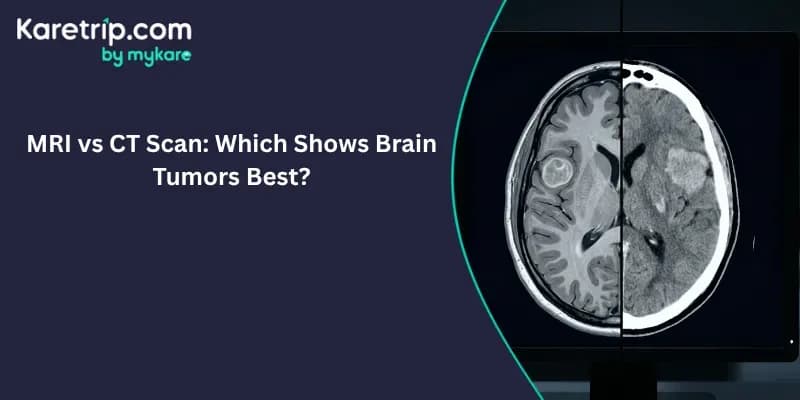

When a patient presents with severe, chronic headaches, unexplained seizures, or sudden changes in vision and balance, neurologists must act swiftly to identify the root cause. The human skull is a formidable, rigid fortress of bone designed to protect our most vital organ. Because doctors cannot physically see through the skull, they must rely on advanced neuro-imaging technology to reveal what is happening inside the brain.
For patients and families navigating the terrifying possibility of a brain tumor, the diagnostic phase is often the most anxiety-inducing part of the journey. In medical clinics from Dhaka to Nairobi to Muscat, the first step in the diagnostic pathway is almost always a requisition for a head scan. But when you look at your doctor’s prescription, you will typically see one of two acronyms: CT or MRI.
What do these letters actually mean? How do the machines differ? And, most importantly, if you are searching for a highly complex mass like a brain tumor, which scan provides the definitive, life-saving clarity your neurosurgeon needs?
At karetrip, we specialize in guiding international patients through the complexities of advanced neurological care in India. We believe that empowering patients with medical knowledge is the first step toward a successful recovery. Here is your comprehensive guide to understanding the distinct scientific differences between MRI and CT scans, definitively answering which is the gold standard for brain tumors, and discovering how to access rapid, elite diagnostic care.
1. The Diagnostic Challenge: Seeing Through the Skull
To understand why one machine outperforms another in brain imaging, it is crucial to understand the biological makeup of the brain itself. Unlike the lungs, which are filled with air, or the skeletal system, which is made of dense calcium, the brain is almost entirely composed of soft tissue and water. It is a highly intricate, densely packed network of grey matter (neurons) and white matter (nerve fibers). When a brain tumor develops, whether it is a slow-growing, benign meningioma or a rapidly aggressive, malignant glioblastoma, it is also composed of soft tissue. The diagnostic challenge for any imaging machine is to provide enough "contrast" (visual difference) to distinguish the abnormal tumor tissue from the healthy brain tissue immediately surrounding it.
2. What is a CT Scan? (The Emergency Responder)
A Computed Tomography (CT) scan is essentially a highly advanced, three-dimensional X-ray. During a CT scan, the patient lies on a table that slides rapidly into a large, donut-shaped machine. Inside the machine, an X-ray tube rotates 360 degrees around the patient's head, taking hundreds of rapid-fire X-ray images from multiple angles. A powerful computer then compiles these individual "slices" to create a detailed, cross-sectional picture of the skull and brain.
The Strengths of a CT Scan:
- Unmatched Speed: A CT scan of the head is incredibly fast, often taking less than two to five minutes to complete. This makes it the absolute gold standard in emergency rooms.
- Detecting Acute Emergencies: If a patient is brought to the hospital after a car accident or a suspected stroke, a CT scan is the best tool to instantly detect a skull fracture or an acute, active hemorrhage (bleeding) in the brain.
- Visualizing Bone and Calcium: CT scans are exceptionally good at imaging dense materials. Some slow-growing brain tumors (like oligodendrogliomas) develop calcifications (calcium deposits) over time, which light up brightly on a CT scan.
The Weaknesses of a CT Scan for Brain Tumors:
- Poor Soft-Tissue Contrast: Because the brain and the tumor are both soft tissues with similar densities, X-rays have a very difficult time telling them apart. A small, early-stage tumor can easily blend into the surrounding healthy brain tissue on a CT scan and go completely unnoticed.
- Radiation Exposure: CT scans utilize ionizing radiation (X-rays). While the dose from a single head CT is relatively low and generally safe, it is still a factor to consider, particularly for pediatric patients who may require multiple scans over their lifetime.
3. What is an MRI? (The Gold Standard for Neuro-Oncology)
Magnetic Resonance Imaging (MRI) operates on completely different principles of physics. There are absolutely no X-rays and zero ionizing radiation involved.
Instead, an MRI machine uses a massive, incredibly powerful magnet and pulses of radio waves. When you lie inside the deep, cylindrical tube of an MRI machine, the magnetic field temporarily aligns the water molecules (protons) inside your brain cells. The machine then sends specific radio wave frequencies that knock these protons out of alignment. When the radio waves are turned off, the protons realign, releasing tiny electrical signals. The MRI's computer translates these signals into breathtakingly detailed, high-resolution images.
Why MRI is the Absolute Best for Brain Tumors:
When it comes to answering the question of which scan shows brain tumors best, the MRI is the undisputed, definitive winner.
- Exquisite Soft-Tissue Detail: Because an MRI relies on the water content of cells, it provides unparalleled contrast between different types of soft tissue. An MRI can easily distinguish between grey matter, white matter, cerebrospinal fluid, and, most importantly, the exact boundaries of a tumor mass.
- Detecting Microscopic Lesions: An MRI can detect tumors that are mere millimeters in size—masses that would be entirely invisible on a standard CT scan.
- Multi-Planar Imaging: While a CT scan is primarily excellent at taking horizontal "slices" of the brain, an MRI can effortlessly image the brain in any plane (horizontal, vertical, or sagittal) without requiring the patient to physically move, giving the neurosurgeon a perfect 3D understanding of the tumor's location.
4. Head-to-Head Comparison: A Quick Reference
| Feature | CT Scan (Computed Tomography) | MRI (Magnetic Resonance Imaging) |
|---|---|---|
| Technology Used | X-Rays (Ionizing Radiation) | Powerful Magnets & Radio Waves |
| Radiation Risk | Low to Moderate | Zero |
| Time to Complete | 2 to 5 minutes | 30 to 60 minutes |
| Best For Detecting | Skull fractures, acute bleeding, bone | Brain tumors, nerve damage, soft tissue |
| Soft-Tissue Detail | Fair Poor | Excellent / Unmatched |
| Patient Experience | Open, fast, quiet | Enclosed tube, loud knocking noises |
Note: If a patient has a cardiac pacemaker, cochlear implants, or certain types of metallic aneurysm clips in their body, they cannot enter an MRI machine due to the powerful magnet. In these rare cases, a specialized CT scan with contrast is used as the alternative.


5. Advanced MRI Techniques: The Tumour Board’s Arsenal
If an initial scan detects a brain tumor, standard MRI imaging is just the beginning. To safely plan a complex craniotomy, elite neurosurgeons in India rely on advanced MRI sub-routines that map the biology and function of the brain in real-time.
MRI with Gadolinium Contrast
To get a clearer picture of the tumor's boundaries, the radiologist will inject a special contrast dye (Gadolinium) into the patient’s vein halfway through the MRI. Because malignant brain tumors rapidly grow their own abnormal, leaky blood vessels, the contrast dye rushes into the tumor and "lights it up" brilliantly on the computer screen. This confirms the exact size of the tumor and indicates how aggressive it might be.
Functional MRI (fMRI)
Before a surgeon can remove a tumor, they must know what the healthy brain tissue immediately surrounding it controls. An fMRI maps the brain's activity by detecting changes in blood flow. While inside the scanner, the patient is asked to perform specific tasks, like tapping their fingers or answering language questions. This allows the computer to visually map the exact location of the patient's speech and motor centers, ensuring the surgeon completely avoids these "eloquent" areas during the operation.
MR Tractography (Diffusion Tensor Imaging - DTI)
This is one of the most visually stunning advancements in neuro-imaging. Tractography maps the microscopic electrical wiring of the brain (the white matter tracts) that connect different brain regions. By visualizing how these delicate nerve fibers wrap around or are pushed aside by a tumor, the neurosurgeon can plan a perfectly safe physical pathway to reach and remove the mass without causing paralysis or vision loss.
6. Rapid Diagnostics: Why International Patients Choose India
In many healthcare systems around the world, obtaining an advanced 3T (3-Tesla) MRI with contrast or securing a Functional MRI can take weeks or even months of waiting. When dealing with a rapidly growing brain tumor like a Glioblastoma, waiting is not an option. Time is directly tied to survival. This urgency is exactly why thousands of international patients travel to India’s elite neurosciences institutes.
- Zero Waiting Times: Top JCI-accredited hospitals in cities like Chennai, Delhi, and Bangalore boast multiple, state-of-the-art 3T MRI suites. Diagnostics that take months to schedule in Europe or Africa are performed within hours of a patient's arrival in India.
- Intra-Operative MRI (iMRI): India is home to several hospitals equipped with MRI machines built directly into the neurosurgical operating theaters. This allows the surgeon to pause mid-surgery, scan the patient’s exposed brain, and mathematically verify that 100% of the tumor has been removed before closing the skull.
- Tumour Board Collaboration: Scans in India are not read by a single radiologist. Complex cases are immediately presented to a multi-disciplinary Tumour Board consisting of neurosurgeons, neuro-oncologists, and neuroradiologists, ensuring a flawless, globally standardized treatment plan.
7. The karetrip Advantage: Your Diagnostic and Surgical Shield
A brain tumor diagnosis triggers a whirlwind of logistical and medical panic. Attempting to organize international flights, secure rapid MRI appointments in a foreign country, and manage medical visas is an immense burden for a family already dealing with a neurological crisis. karetrip serves as your dedicated logistical armor. We manage the entire international framework so your only focus is on your diagnosis and recovery.
- Priority Remote Second Opinions: Do not wait in fear. Before you book a flight, our digital concierge allows you to securely upload the initial CT or MRI scans taken in your home country. We bypass standard hospital queues, delivering your files directly to India’s leading Tumour Boards. You will receive an expert second opinion and a clear recommendation on the next required steps remotely.
- Fast-Track Medical Visas: You cannot enter India for diagnostics and surgery without an official, stamped Visa Invitation Letter from an accredited hospital. karetrip secures this critical document within 24 hours of your clinical review, heavily expediting your Medical Visa application.
- VIP Airport & Ground Transfers: Navigating a bustling airport with severe headaches, balance issues, or neurological deficits is unsafe. Our ground team meets you at the arrival gate with wheelchair assistance, fast-tracks your immigration, and transports you in a premium vehicle directly to the imaging center or your accommodation.
- Sanitized, Stress-Free Housing: A patient undergoing rigorous diagnostics and awaiting brain surgery needs a deeply quiet, sanitized sanctuary. karetrip books premium, elevator-accessible serviced apartments close to the hospital. These feature private kitchens, ensuring your family can prepare safe, familiar meals in a private, hygienic environment.
Conclusion: Clarity is the First Step to Healing
If you or a loved one are facing the terrifying prospect of a brain tumor, the medical consensus is absolute: an MRI is the definitive, gold-standard imaging tool required to safely and accurately visualize the mass. While a CT scan serves a vital role in emergency trauma, it cannot provide the exquisite soft-tissue detail required by modern neurosurgeons.
By choosing to access the advanced diagnostic infrastructure and elite Tumour Boards available in India, you are empowering your medical team with the clearest possible picture of your condition. And by partnering with karetrip, you guarantee that every logistical hurdle, from securing priority MRI slots to managing international visas, is handled with flawless precision.
Are you seeking an expert second opinion on a recent head scan? Do not let geographical borders delay critical clarity. Chat with Rua, our dedicated digital concierge and patient care coordinator. Securely upload your latest CT or MRI reports today. Rua will instantly organize a priority clinical evaluation with India’s leading neurosurgeons, outline your exact diagnostic requirements, and secure your urgent Visa Invitation Letter to initiate your journey to healing.
Medical Disclaimer
The content provided in this blog is for informational and educational purposes only. The choice between an MRI and a CT scan depends entirely on the patient's specific symptoms, medical history, and whether they have any contraindications to powerful magnetic fields (such as a pacemaker). Only a certified neurologist or neurosurgeon can prescribe the appropriate diagnostic imaging. karetrip facilitates priority appointments, travel logistics, and secure online clinical reviews with specialized Tumour Boards, but does not provide direct medical advice.