The Role of a Gastroenterologist in Early Detection of GI Cancers
In This Article
The Role of a Gastroenterologist in Early Detection of GI Cancers

Dr. Fazeela
Updated on March 18, 2026

Medically verified by Dr. Fazeela
Fact checked by Dr. Fazeela
For You
8 minutes
Hearing the word "cancer" is a moment that instantly changes your life. It brings an immediate wave of fear, uncertainty, and a sudden urgency to find the best possible medical care. But when it comes to cancers of the digestive system, known as Gastrointestinal (GI) cancers, there is a powerful, life-saving truth that many patients do not realise: these cancers are highly preventable and incredibly treatable if they are caught early.
The tragedy of GI cancers, such as stomach, colon, and esophageal cancer, is that they are deeply silent in their early stages. They do not announce themselves with sudden, sharp pains or dramatic symptoms. By the time a patient begins to experience severe weight loss, chronic bleeding, or an inability to swallow, the disease has often advanced significantly. This is why waiting for symptoms to appear is a dangerous strategy.
Your ultimate defence against this silent threat is a proactive medical specialist: the gastroenterologist. For international patients travelling from the Middle East, Africa, and neighbouring South Asian countries like Bangladesh, etc.., accessing advanced, preventative gastrointestinal screening is a massive priority. Standard local clinics often lack the high-definition imaging technology required to spot microscopic, precancerous changes in the digestive tract.
At Karetrip, we are dedicated to shifting the focus from reactive cancer treatment to proactive cancer prevention. We seamlessly connect international patients to the most elite digestive health specialists in India. Here is your comprehensive guide to understanding exactly how a gastroenterologist detects GI cancers early, the advanced technology they use, and how Karetrip ensures your medical travel is completely stress-free.
1. The Silent Threat: Understanding Gastrointestinal Cancers
To understand the vital role of a gastroenterologist, you must first understand the battlefield. Gastrointestinal cancers refer to any malignancy that develops within the digestive tract. This complex system is responsible for breaking down food, absorbing nutrients, and expelling waste. Because the digestive organs are located deep inside the abdomen, tumors can grow for months or even years without causing any noticeable outward physical changes.
The most common types of GI cancers include:
- Colorectal Cancer (Colon and Rectum): This almost always begins as a small, non-cancerous growth called a polyp on the inner lining of the colon. Over several years, these polyps can slowly mutate into cancer.
- Gastric (Stomach) Cancer: Often linked to a common bacterial infection called Helicobacter pylori (H. pylori) or long-term severe acid reflux, stomach cancer develops slowly in the lining of the stomach and frequently mimics the symptoms of a basic stomach ulcer.
- Esophageal Cancer: This occurs in the long, hollow tube that runs from your throat to your stomach. Chronic heartburn and acid reflux (GERD) can damage the lining of the esophagus over time, leading to precancerous changes known as Barrett’s esophagus.
- Pancreatic and Liver Cancers: These are among the most difficult to detect early because they are hidden behind other organs and rarely cause symptoms until they begin pressing against nearby nerves or blood vessels.
Because these organs work together in a dark, enclosed environment, doctors cannot simply look at or feel a precancerous growth from the outside of your body. They need specialized tools and specialized training to see inside.
2. The Cancer Detective: Your Gastroenterologist
A gastroenterologist is not just a doctor who treats an upset stomach or acid reflux. They are highly specialized medical detectives trained specifically to explore the vast, complex ecosystem of your digestive tract. They undergo years of intensive training in internal medicine, followed by specialized fellowships focusing entirely on digestive health and endoscopic procedures.
Their primary role in the fight against cancer is not to perform open surgery or administer chemotherapy. Their role is interception. A skilled gastroenterologist aims to find the cancer before it is technically cancer, or at "Stage 0," when the abnormal cells are confined to the very top layer of the digestive lining.
When international patients, particularly those traveling from neighboring Bangladesh, Oman, or Nepal, begin their search for specialized, high-tech care, finding one of thr best Gastroenterologist in Kolkata often becomes their highest priority. Kolkata serves as a premier, geographically accessible medical hub that houses some of the most advanced gastroenterology departments in South Asia. By consulting an elite specialist in these top-tier hospitals, patients gain access to doctors who have performed tens of thousands of endoscopic screenings, giving them an unparalleled "clinical eye" for spotting the tiniest cellular abnormalities.

 10 min read
Indian Medical Tourism – Myths Vs Reality
 10 min read
Availability of Home Care Services Post-Treatment in India
 10 minutes
 Kidney Transplant Laws in India for Foreigners (2026 Rules)
Get a Callback Now
3. The Arsenal of Detection: Advanced Screening Technologies
A gastroenterologist's ability to save lives relies heavily on the technology they wield. In 2026, the diagnostic tools available at India's leading hospitals are incredibly sophisticated. These are not just cameras; they are high-definition, microscopic, and highly precise medical instruments.
The Gold Standard: Colonoscopy
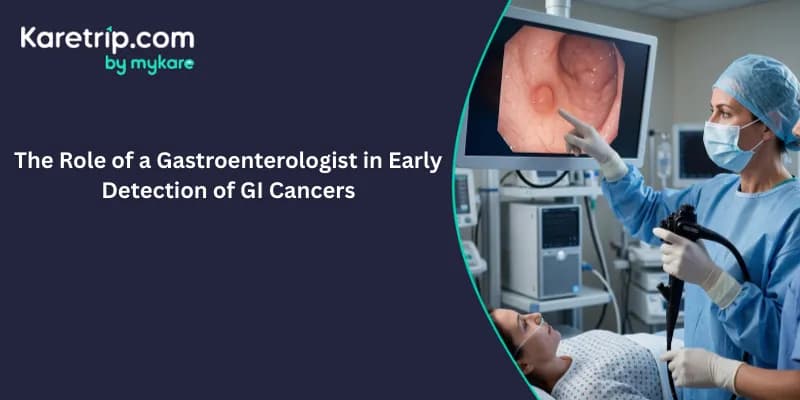
A colonoscopy is arguably the most powerful cancer prevention tool in all of modern medicine. During this outpatient procedure, the gastroenterologist guides a flexible, lighted tube with a high-definition camera (an endoscope) through the entire length of the colon.
- The Power of Polypectomy: If the doctor spots a polyp (a precancerous growth), they do not just take a picture of it. They use tiny surgical tools passed through the endoscope to snip the polyp off and remove it entirely right then and there. By removing the polyp, the gastroenterologist physically prevents colon cancer from ever forming.
Upper GI Endoscopy (Gastroscopy)
If you suffer from chronic heartburn, unexplained vomiting, or difficulty swallowing, the gastroenterologist will perform an upper endoscopy. The camera is gently guided down the throat to inspect the esophagus, stomach, and the beginning of the small intestine.
- Precision Biopsies: The doctor can easily identify ulcers, inflammation, and abnormal tissue. They will take a painless microscopic tissue sample (a biopsy) and send it to a pathology lab. This allows them to detect H. pylori infections or early-stage stomach cancer long before a tumor is visible on an X-ray.
Endoscopic Ultrasound (EUS)
Standard ultrasounds from the outside of your belly cannot clearly see the pancreas because stomach gas blocks the sound waves. EUS solves this problem. The gastroenterologist uses a special endoscope with a tiny ultrasound wand attached to its tip. By placing it inside the stomach, the doctor can look through the stomach wall to get highly detailed, close-up images of the pancreas, liver, and bile ducts, allowing them to detect tiny, hidden pancreatic tumors that standard CT scans might miss.
Chromoendoscopy & Narrow Band Imaging (NBI)
In top Indian hospitals, gastroenterologists use special blue and green light filters (NBI) or safe medical dyes (chromoendoscopy) sprayed onto the stomach or colon lining during the procedure. This high-contrast imaging makes the microscopic blood vessels surrounding a hidden, flat tumor light up in stark contrast to healthy tissue, making it impossible to miss.
4. Who Needs to Travel for GI Screening?
You should not wait until you are sick to see a gastroenterologist. Preventative screening is heavily dependent on your age, your family history, and your lifestyle. You should actively plan to travel to India for a comprehensive GI screening if you fall into any of these categories:
- The Age Factor: Global medical guidelines strongly recommend that all adults, regardless of how healthy they feel, begin routine colon cancer screenings (colonoscopies) at age 45.
- Family History: If your parent, sibling, or child has had colon, stomach, or pancreatic cancer, your risk is significantly higher. You should begin screening 10 years earlier than the age your family member was when they were diagnosed.
- Chronic Digestive Issues: If you suffer from long-term, untreated Acid Reflux (GERD), Inflammatory Bowel Disease (like Crohn’s disease or Ulcerative Colitis), or a history of stomach ulcers, the constant inflammation greatly increases your cancer risk.
- Unexplained Symptoms: If you are experiencing unexplained weight loss, chronic fatigue and anemia, black or bloody stools, or a sudden, persistent change in your bowel habits, you must consult a specialist immediately.
5. Seamless Medical Travel with Karetrip
Understanding the need for a colonoscopy or an endoscopy is one thing; organizing international travel to get the procedure done is another. Many patients delay these life-saving screenings because the logistics of securing visas, finding a reputable hospital, and booking a hotel feel incredibly overwhelming. This is exactly where karetrip changes the narrative. We act as your dedicated healthcare concierge, removing every single logistical barrier between you and your preventative screening.
- Priority Hospital Appointments: We bypass the standard international inquiry queues. We connect your medical files directly to the leading gastroenterology departments in India, securing your priority consultation slots so you never waste a day waiting in a lobby.
- Fast-Track Visa Support: You cannot apply for a medical visa without official hospital documentation. karetrip ensures you receive your stamped Visa Invitation Letter within 24 hours of your booking, allowing you to fast-track your e-Medical Visa or IVAC paper visa application smoothly.
- Comfortable, Stress-Free Recovery: Colonoscopies and endoscopies are outpatient procedures requiring mild sedation. You will need a comfortable place to rest afterward. Instead of standard hotels, we book you into sanitized, premium serviced apartments close to the hospital. These feature private kitchens so your family can prepare light, familiar, culturally appropriate meals while you recover.
- Dedicated Language Translation: Medical terminology can be confusing, especially when discussing biopsies and pathology reports. We provide fluent translators in Bengali, Arabic, French, and other languages to ensure you and your gastroenterologist understand each other perfectly.
Conclusion: Empower Yourself Through Early Detection
Gastrointestinal cancers are quiet, but modern medicine is louder. By choosing to undergo routine screenings with a specialized gastroenterologist, you are taking absolute control over your health. You are choosing to intercept the disease before it can take root, ensuring a long, healthy life for yourself and your family.
With India's advanced medical infrastructure and the unwavering logistical support of karetrip, accessing this life-saving preventative care has never been easier, safer, or more comfortable.
Are you ready to prioritize your digestive health? Do not wait for symptoms to appear. Chat with Rua, our dedicated patient care coordinator. Securely upload your basic medical history or current symptoms. Rua will instantly organize a priority clinical review with India's top gastroenterologists, schedule your comprehensive screening procedures, and secure your urgent Visa Invitation Letter.
Medical Disclaimer
The content provided in this blog is for educational and informational purposes only. Preventative screening guidelines vary based on individual health history, genetics, and pre-existing conditions. Only a certified gastroenterologist can determine the appropriate diagnostic procedures for your specific case. Karetrip facilitates priority appointments, online clinical reviews, and comprehensive travel logistics, but does not provide direct medical advice.

Silent Progression: Gastrointestinal cancers (colon, stomach, esophageal) often show absolutely zero symptoms in their early, most curable stages.
Proactive Prevention: A gastroenterologist uses tools like colonoscopies to find and physically remove precancerous polyps, effectively preventing cancer before it starts.
Advanced Imaging: Elite Indian hospitals utilize Endoscopic Ultrasound (EUS) and Narrow Band Imaging to detect microscopic tumors hidden deep inside the digestive tract.
Screening Guidelines: All adults should begin routine colonoscopies by age 45, or earlier if there is a family history of GI cancers.
karetrip’s Support: Connect with Rua to secure your priority appointment, manage your fast-track Medical Visa, and book your comfortable recovery accommodations in India.
Source Links
American Gastroenterological Association (AGA)
World Health Organisation (WHO)
Karetrip ( gastroenterology )



