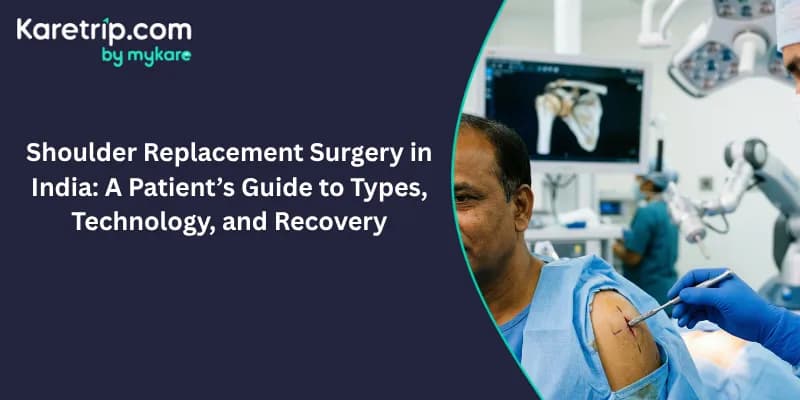

The shoulder is the most mobile joint in the human body. We don't often realize how much we depend on it until the simple act of reaching for a shelf, putting on a shirt, or even sleeping on your side becomes an exercise in sharp, radiating pain. When the cartilage in your shoulder wears thin, whether due to years of heavy use, severe arthritis, or a catastrophic injury, your world begins to shrink. You stop reaching out, and eventually, you stop moving.
While hip and knee replacements are the most talked-about orthopedic procedures, shoulder replacement surgery in India has seen a massive technological surge over the last decade. Every year, patients from the Middle East, Africa, and neighboring Asian countries travel to India’s orthopedic hubs to access surgical mastery that was once reserved for the elite clinics of Europe and the United States.
1. Understanding the Procedures: Which Fix is Right for You?
Not all shoulder pain is created equal. The type of replacement your surgeon recommends depends entirely on the status of your "Rotator Cuff", the group of muscles and tendons that keep your arm bone in its socket.
A. Anatomic Total Shoulder Replacement
This is the standard procedure for patients with severe osteoarthritis but a healthy, intact rotator cuff.
- The Fix: The surgeon replaces the "ball" (the head of the humerus) with a metal sphere and the "socket" (the glenoid) with a smooth plastic cup. It mimics your natural anatomy perfectly.
- The Outcome: Excellent pain relief and a near-total restoration of your original range of motion.
B. Reverse Total Shoulder Replacement
This is the "revolutionary" fix for complex cases, especially for patients with massive rotator cuff tears or severe "Cuff Tear Arthropathy."
- The Fix: The anatomy is reversed. The "ball" is attached to your shoulder blade, and the "socket" is attached to the top of your arm bone.
- The Outcome: This allows the deltoid muscle (the large muscle on the outside of your shoulder) to do the work that the damaged rotator cuff can no longer do. It is often a miracle for patients who previously had "pseudoparalysis" (the inability to lift their arm at all).
C. Partial Shoulder Replacement (Hemiarthroplasty)
If only the "ball" of the joint is damaged (common in certain types of fractures or avascular necrosis) while the socket remains healthy, the surgeon may replace only the humeral head.
2. Why India is the Global Destination for Shoulder Care
India has emerged as a premier hub for complex joint reconstructions for three primary reasons: Technological Supremacy, Surgical Volume, and Value.
-
3.D. Pre-operative Mapping: Elite Indian hospitals now utilize advanced software to take your CT scans and create a 3D digital blueprint of your shoulder. Surgeons use this "GPS" to determine the exact size and angle of the implant before they even enter the operating theater.
-
Mastery of Revision Surgery: Many international patients travel to India because their previous surgeries elsewhere failed. Indian ortho-oncologists and senior replacement surgeons are world-renowned for their ability to perform complex "Revision Shoulder Replacements," removing old implants and rebuilding the joint.
-
JCI-Accredited Safety: From Apollo and Fortis to Max and Manipal, the top hospitals in India subject themselves to rigorous Joint Commission International (JCI) audits. This ensures that infection control, sterilization, and patient safety protocols meet the highest global benchmarks.
3. The Timeline: What to Expect in India
Shoulder replacement is a journey, not an event. If you are traveling to India, you must plan for a structured recovery window.
-
Hospital Stay (3 to 5 Days): You will spend the first few days in the hospital for pain management and to begin passive physical therapy. Most surgeons in India use "Regional Nerve Blocks," which keep the arm numb for the first 24 hours, dramatically reducing post-operative pain.
-
The 2-Week "Watch" Period: Following discharge, international patients are strictly required to stay in India for an additional 14 to 21 days. This is the critical window where your surgeon monitors wound healing, removes sutures, and ensures there is no sign of infection before you are cleared for the physical stress of an international flight.
4. Your Logistical Armor
Navigating a foreign city with one arm in a sling is a significant challenge. You cannot focus on your bone healing if you are worried about medical visas, transportation, or finding safe food. karetrip serves as your dedicated clinical concierge, managing every administrative and logistical detail of your journey.
Priority Remote Reviews
Do not travel based on guesswork. Upload your MRI and CT scans to our secure portal. We bypass standard inquiry desks and present your files directly to India's elite orthopedic specialists. You receive an expert second opinion and a transparent cost estimate while resting safely at home.
Fast-Track Medical Visas
Time is your greatest asset. We secure your official Visa Invitation Letter (VIL) from the hospital within 24 hours, heavily expediting your Medical Visa application at the Indian High Commission.
The "Clinical Kitchen" Housing Standard
Following shoulder surgery, your immune system is vulnerable, and your body requires specific nutrition to fuse the bone to the implant. karetrip exclusively arranges premium, deeply sanitized serviced apartments. These feature private kitchens, allowing your family to prepare fresh, hygienic, and culturally familiar meals. This completely eliminates the infection risks associated with relying on restaurant food during your recovery.
VIP Ground Support
From wheelchair assistance at the airport to providing a dedicated medical translator for your consultations, our ground team ensures you are fiercely protected and never alone in a foreign city.
Conclusion: Reclaim Your Range of Motion
Shoulder replacement is more than a surgery; it is a restoration of your dignity and your ability to interact with the world. Whether you need a standard anatomic replacement or the complex biomechanical shift of a reverse shoulder replacement, India offers the robotic technology and surgical mastery required for a successful outcome.
By partnering with karetrip, you ensure that the massive logistical burden of international medical travel, from fast-track visas to sanitized, kitchen-equipped housing, is handled with absolute perfection. We carry the administrative weight so you can focus 100% of your energy on your rehabilitation.
Are you ready to discuss your surgical options in India? Do not let chronic pain dictate your future. Chat with Rua, our dedicated patient care coordinator. Securely upload your latest medical reports today. Rua will instantly organize a priority clinical evaluation with India’s leading orthopedic specialists and secure your urgent Visa Invitation Letter to initiate your journey to recovery.
Medical Disclaimer
The content provided in this blog is for informational, logistical, and educational purposes only. Shoulder surgery is a major clinical intervention and carries inherent biological risks. Eligibility for anatomic versus reverse replacement depends entirely on the status of your rotator cuff and overall bone density. karetrip facilitates priority appointments, travel logistics, and secure online clinical reviews, but does not provide direct medical advice. Always consult with a certified orthopedic surgeon to determine the safest clinical pathway for your specific condition.