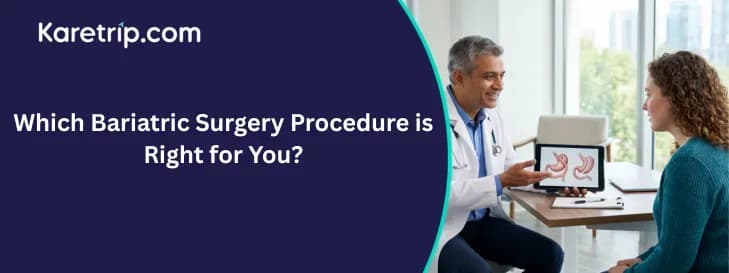

Deciding to undergo bariatric surgery is a monumental turning point in your life. After years of fighting a failing metabolism, you are finally ready to take clinical control of your weight and your health.
But immediately after making this decision, you hit a wall of medical jargon. Sleeve gastrectomy? Roux-en-Y? Mini-bypass? When international patients begin researching weight-loss surgery in India, they often treat the procedure list like a restaurant menu, picking the surgery that sounds the fastest or the cheapest. This is a dangerous approach. Bariatric surgery is not one-size-fits-all. The anatomy of your digestive tract is being permanently altered, and the "best" surgery depends entirely on your specific biological markers: your Body Mass Index (BMI), your eating habits, and the presence of underlying diseases like Type 2 diabetes or severe acid reflux.
Choosing the wrong procedure can lead to inadequate weight loss, severe vitamin deficiencies, or worsening heartburn.
Laparoscopic Sleeve Gastrectomy: The "Restrictor"
This has become the most widely performed bariatric surgery in the world, and for good reason. It is straightforward, highly effective, and carries a slightly lower risk of long-term nutritional deficiencies compared to a full bypass.
-
How it Works: The surgeon removes approximately 80% of your stomach, leaving a narrow, banana-shaped "sleeve."
-
The Science: This procedure works in two ways. First, it physically restricts the amount of food you can eat. Second, by removing the upper portion of the stomach (the fundus), the surgeon removes the area that produces ghrelin, the primary hormone that makes you feel hungry.
-
Who it is For: Patients with a BMI over 35 or 40. 1. Patients who take multiple medications that need to be fully absorbed by the stomach. 2. Patients with multiple prior abdominal surgeries.
-
Who Should AVOID It: If you suffer from severe, chronic acid reflux (GERD) or frequent heartburn, you should not get a sleeve. The high-pressure sleeve environment will often make acid reflux significantly worse.
Roux-en-Y Gastric Bypass (RYGB): The "Metabolic Reset"
Often referred to as the "Gold Standard" of bariatric surgery, the gastric bypass is a more complex, powerful procedure that fundamentally rewires your digestion.
-
How it Works: The surgeon creates a tiny, egg-sized pouch at the top of the stomach. They then cut the small intestine and connect it directly to this new, tiny pouch.
-
The Science: Food completely bypasses the rest of the stomach and the first section of the small intestine. This not only restricts food intake but drastically reduces the number of calories and nutrients your body absorbs. More importantly, it triggers a massive release of gut hormones that instantly improve insulin resistance.
-
Who it is For:
- Patients with severe, uncontrolled Type 2 Diabetes. The bypass often puts diabetes into remission before the patient even leaves the hospital.
- Patients suffering from severe acid reflux or GERD (the bypass practically cures heartburn).
- Patients with a very high BMI (50+), or those who consume a lot of high-sugar foods (as eating sugar after a bypass causes "dumping syndrome," effectively training you to avoid sweets).
-
The Trade-Off: Because you absorb fewer nutrients, you must be fiercely dedicated to taking specific bariatric multivitamins and calcium supplements for the rest of your life to prevent osteoporosis and anemia.
Mini Gastric Bypass (MGB / OAGB)
The Mini Gastric Bypass (or One Anastomosis Gastric Bypass) is a newer, streamlined version of the traditional Roux-en-Y bypass.
-
How it Works: The surgeon creates a longer, tube-like stomach pouch and connects it to the small intestine with only one connection (anastomosis), instead of the two required in a standard bypass.
-
The Science: It provides excellent restriction and malabsorption, leading to massive weight loss and diabetes resolution, but requires less operating time.
-
Who it is For: Patients looking for the powerful metabolic and diabetic benefits of a full bypass but seeking a slightly shorter time under anesthesia.
-
The Trade-Off: There is a slightly higher risk of bile reflux (bile washing up into the stomach pouch) compared to the traditional Roux-en-Y bypass.


The Intragastric Balloon: The Non-Surgical Bridge
Not everyone qualifies for, or wants, permanent surgical alterations to their stomach.
-
How it Works: This is an endoscopic procedure, meaning there are no cuts or incisions. A deflated silicone balloon is passed down your throat into your stomach and then filled with sterile saline water. It takes up about 50% of your stomach space. It is removed after 6 to 12 months.
-
The Science: You feel full much faster and stay full longer, helping you learn portion control.
-
Who it is For:
- Patients with a lower BMI (27 to 35) who do not qualify for major surgery but need to lose 15 to 20 kilograms.
- Super-obese patients who are too high-risk for anesthesia and need to lose weight before undergoing a safe sleeve or bypass surgery.
The karetrip Protocol: Securing Your Clinical Roadmap
Understanding the procedures is empowering, but you should never self-diagnose. Traveling to India for bariatric surgery without a confirmed, board-certified recommendation is a massive logistical risk.
This is how karetrip protects your journey:
-
Remote Clinical Validation: Before you book a flight or apply for a Medical Visa, you upload your local bloodwork, BMI history, and co-morbidity list (diabetes, GERD, sleep apnea) to our secure vault. We facilitate a remote review with an elite, JCI-accredited Indian Bariatric Board.
-
The Exact Recommendation: The surgical board analyzes your data to recommend the precise procedure, be it a Sleeve or a Bypass, that maximizes weight loss while ensuring your biological safety. You receive a finalized clinical plan and an exact financial estimate upfront.
-
The Dietary Sanctuary: Regardless of which procedure you choose, your post-operative recovery requires a strict, 14-day liquid and puree diet before you can fly home. We bypass dangerous commercial hotels and transition you into a karetrip sanitized private apartment. Featuring a fully equipped private kitchen, your accompanying family can safely prepare your zero-sodium broths and specialized protein shakes, ensuring your newly operated stomach heals perfectly.
Conclusion: Aligning Your Biology with the Right Tools
Bariatric surgery is the most effective tool in modern medicine for treating severe obesity, but a tool only works if it matches the job. If you suffer from severe acid reflux, a Sleeve Gastrectomy is the wrong tool. If you have aggressive Type 2 diabetes, a Gastric Bypass is your ultimate weapon.
India’s premier medical institutions offer the absolute cutting edge of bariatric science, utilizing the same robotic and laparoscopic platforms as the best Western hospitals at a fraction of the cost. By partnering with karetrip, you ensure that your clinical choice is validated by experts before you travel, and your post-operative recovery is protected within a safe, kitchen-equipped sanctuary.
Are you unsure which bariatric procedure your body needs?
Stop guessing. Chat with Rua, our dedicated patient care coordinator. Securely upload your medical history today, and karetrip will organize a free, priority remote consultation with India’s leading metabolic surgeons.
Medical Disclaimer
The clinical frameworks and procedural comparisons provided in this article are intended strictly for educational and planning purposes and do not substitute for professional medical counsel. Bariatric surgery is a major metabolic intervention carrying inherent surgical and nutritional risks. Final clinical eligibility and procedural selection depend entirely on an individual patient's comprehensive medical history, anatomical structure, and surgeon's assessment. karetrip serves as an independent medical facilitation platform, organizing secure data transfers, priority specialist consultations, and travel logistics exclusively with verified JCI/NABH-accredited institutions, but does not provide direct medical treatment. Always consult directly with a board-certified Bariatric Surgeon regarding your specific medical pathway.