
A cancer diagnosis brings many questions and radiation therapy is often one of the most worrying parts of treatment. Many patients fear pain, side effects, or the unknown process itself.
The truth is, radiation therapy is a carefully planned and highly controlled treatment used worldwide to destroy cancer cells while protecting healthy tissue. Understanding each step can reduce anxiety and help you feel more prepared.
If you or your family member is preparing for treatment abroad, knowing what happens before, during, and after therapy can make the journey smoother.
Feeling unsure about your treatment plan? Ask RUA for personalized guidance.
What Is Radiation Therapy?
Radiation therapy uses high-energy rays (similar to X-rays) to destroy cancer cells or stop them from growing.
It works by damaging the DNA of cancer cells so they cannot multiply.
Radiation therapy may be used to:
- Cure cancer
- Shrink tumors before surgery
- Destroy remaining cancer cells after surgery
- Relieve symptoms such as pain or bleeding
Treatment is painless and performed using advanced machines operated by trained radiation oncologists.
Step-by-Step Process of Radiation Therapy
Understanding the process helps remove fear and uncertainty.
Step 1: Initial Consultation
Your radiation oncologist reviews:
- Medical history
- Biopsy reports
- Imaging scans (CT, MRI, PET)
The doctor explains:
- Treatment goals
- Number of sessions
- Possible side effects
This step ensures radiation is safe and suitable for your condition.
Step 2: Simulation & Treatment Planning
This is one of the most important stages.
During simulation:
- A CT scan maps the exact tumor location.
- Your body position is carefully planned.
- Small skin markings or masks may be created to keep you still.
This allows radiation to target cancer precisely while protecting nearby organs.
Step 3: Personalized Radiation Plan Creation
A team of specialists creates your customized treatment plan using advanced software.
They calculate:
- Radiation dose
- Treatment angles
- Session duration
Planning may take a few days because accuracy is critical.
Step 4: First Radiation Therapy Session
When treatment begins:
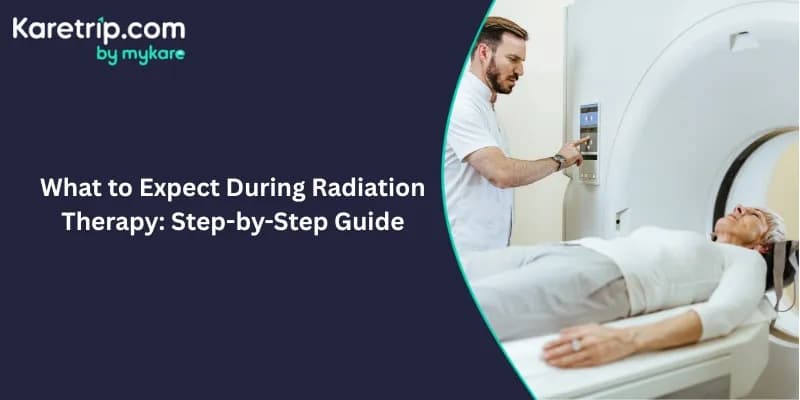
- You lie on a treatment table.
- Therapists position you exactly as during simulation.
- The machine moves around your body without touching you.
Important to know:
- Treatment is painless
- You will not feel radiation
- Session lasts 10–20 minutes
You can breathe normally throughout.


Step 5: Daily Treatment Sessions
Most patients receive radiation:
- 5 days per week
- For 2–7 weeks, depending on cancer type
Each session is quick, and patients usually go home the same day.
Consistency is important because radiation works gradually over time.
Step 6: Weekly Doctor Reviews
Your care team monitors:
- Side effects
- Energy levels
- Skin reactions
- Treatment response
Adjustments are made if needed to maintain safety and comfort.
Step 7: Completion of Therapy
After finishing treatment:
- Follow-up scans are scheduled.
- Side effects may continue temporarily.
- Tumor shrinkage may occur over weeks or months.
Radiation keeps working even after sessions end.
Common Side Effects During Radiation Therapy
Side effects depend on the treated area.
Common temporary effects include:
- Fatigue
- Skin redness or irritation
- Mild swelling
- Difficulty swallowing (neck/chest radiation)
- Digestive discomfort (abdominal radiation)
Most side effects improve gradually after treatment.
Recovery Timeline After Radiation Therapy
Recovery varies, but typically:
- Fatigue improves within 2–6 weeks
- Skin healing occurs in 3–4 weeks
- Normal routine resumes gradually
- Follow-ups every 3–6 months
Your doctor will guide long-term monitoring.
Radiation Therapy in India for International Patients
India offers advanced radiation technologies such as:
- IMRT (Intensity-Modulated Radiation Therapy)
- IGRT (Image-Guided Radiation Therapy)
- SBRT & CyberKnife treatments
International patients choose India because of:
- Experienced radiation oncologists
- Modern cancer centers
- Short waiting time
- Affordable treatment costs
- Comprehensive patient support
How Karetrip Helps
Planning cancer treatment in another country can feel overwhelming.
Karetrip supports you through:
- Hospital and radiation center shortlisting
- Oncologist comparison
- Transparent treatment cost guidance
- Medical visa and travel assistance
- End-to-end treatment coordination
Ask RUA to get started.
Medical Disclaimer
This information is intended primarily for informational purposes and should not be used in place of expert medical advice. A skilled oncologist must always be consulted when making treatment recommendations based on each patient's unique medical assessment.