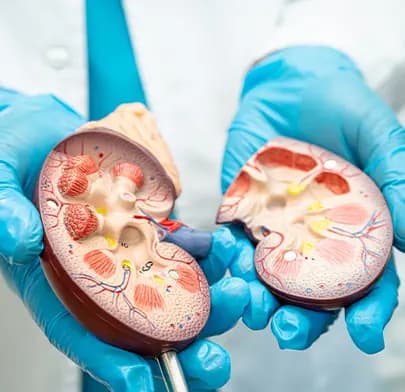
Percutaneous Nephrostomy
Percutaneous nephrostomy is a minimally invasive procedure that drains urine from the kidney by inserting a catheter through the skin into the kidney, guided by imaging, to bypass blockages. It is often used to treat obstructions caused by kidney stones, tumors, or other conditions, relieving pain and preventing complications from urine backup.
 Free Pick up and Drop
No Cost EMI
Post Surgery Care
Percutaneous nephrostomy is a minimally invasive procedure that drains urine from the kidney by inserting a catheter through the skin into the kidney, guided by imaging, to bypass blockages. It is often used to treat obstructions caused by kidney stones, tumors, or other conditions, relieving pain and preventing complications from urine backup.
Symptoms Of Percutaneous Nephrostomy
Symptoms
Symptoms of Obstruction in Urinary Tract
 Severe abdominal pain
 Frequent urge to urinate
 Difficulty urinating
 Blood in the urine
 Types of conditions
There are 4 main types of Percutaneous Nephrostomy
Standard Percutaneous Nephrostomy
Fluoroscopy-Guided Percutaneous Nephrostomy
Ultrasound-Guided Percutaneous Nephrostomy
CT-Guided Percutaneous Nephrostomy
Standard Percutaneous Nephrostomy
A thin needle is inserted through the skin into the kidney to access the renal pelvis, followed by the placement of a drainage catheter to allow urine to bypass the obstruction and drain externally.
Involves the use of fluoroscopy (real-time X-ray imaging) to guide the insertion of the needle and catheter into the kidney, ensuring accurate placement and optimal drainage.
Ultrasound imaging may be used instead of fluoroscopy to guide the needle and catheter insertion, particularly in cases where fluoroscopy is not readily available or when minimizing radiation exposure is a concern.
In some complex cases, such as when there are multiple obstructions or abnormal kidney anatomy, computed tomography (CT) imaging may be used to guide the procedure and ensure precise placement of the drainage catheter.
SYMPTOMS OF OBSTRUCTION IN URINARY TRACT
-
Severe or sudden abdominal pain - This pain may be sharp or cramping and is typically located on one side of the body, indicating potential obstruction or irritation in the urinary tract, such as from a kidney stone or urinary tract infection.
-
Frequent urge to urinate - These symptoms suggest potential blockage or obstruction in the urinary tract, causing disruption in normal urine flow and leading to urgency, hesitancy, or retention.
-
Difficulty urinating - refers to a condition where individuals experience challenges initiating or maintaining the urinary stream, often accompanied by a sense of incomplete emptying or straining during urination.
-
Blood in the urine - The presence of blood in the urine, which may be visible or microscopic, can indicate various underlying conditions such as kidney stones, infections, tumors, or trauma to the urinary tract, often associated with obstruction or irritation.
DIAGNOSIS
The diagnosis of obstruction in the urinary tract typically involves a combination of medical history assessment, physical examination, and diagnostic tests. These may include:
-
Medical History - Evaluating symptoms such as flank pain, urinary urgency, difficulty urinating, and hematuria.
-
Physical Examination - Palpation of the abdomen and assessment of urinary symptoms.
-
Imaging Studies - Imaging tests like ultrasound, CT scan, or MRI to visualize the urinary tract and identify any structural abnormalities or blockages.
-
Urine Tests - Analysis of urine samples to check for signs of infection, blood, or other abnormalities.
-
Urodynamic Studies - Tests to assess bladder function and urine flow rate.
-
Cystoscopy - A procedure using a thin tube with a camera (cystoscope) to examine the inside of the bladder and urethra for any abnormalities or blockages.
-
Voiding Cystourethrogram (VCUG) - A type of X-ray procedure to evaluate bladder and urethra function during urination.
-
Intravenous Pyelogram (IVP) - A special type of X-ray test to visualize the kidneys, ureters, and bladder after injecting a contrast dye.
-
Renal Scintigraphy - A nuclear medicine imaging test to assess kidney function and drainage.
-
Biopsy - In some cases, a tissue sample may be collected from the urinary tract for further analysis, particularly if cancer or other serious conditions are suspected.
RISK FACTORS
- Age: Older adults are more prone to urinary tract issues due to factors like weakened bladder muscles or enlarged prostate.
- Gender: Men are at higher risk due to conditions such as prostate enlargement or prostate cancer.
- Urinary Tract Conditions: Prior history of urinary tract infections, kidney stones, or bladder dysfunction increases the risk.
- Structural Abnormalities: Congenital abnormalities or anatomical variations in the urinary tract can predispose individuals to obstruction.
- Pregnancy: Pregnant women may experience temporary obstruction due to pressure on the bladder or ureters from the growing uterus.
- Enlarged Prostate: Benign prostatic hyperplasia (BPH) in men can lead to urinary tract obstruction.
- Certain Medications: Drugs that affect bladder or urethral function, such as anticholinergics or medications for enlarged prostate, can contribute to obstruction.
- Neurological Conditions: Nerve damage or conditions like spinal cord injury can disrupt bladder function and contribute to obstruction.
- History of Surgery: Prior surgeries involving the urinary tract or nearby structures may increase the risk of scar tissue formation and subsequent obstruction.
- Obesity: Excess body weight can put pressure on the urinary tract, leading to obstruction or urinary retention.
PREPARING FOR SURGERY
Before the Procedure:
You will be instructed to abstain from consuming food or liquids for at least six hours before the scheduled surgery. However, you can take prescribed medications with a small amount of water as directed by your healthcare provider.
Timely arrival at the hospital is crucial. Upon arrival, patients are positioned on the surgical table. They receive local anesthesia, and if necessary, sedatives to minimize discomfort during the operation.
During the Procedure:
The procedure starts with the insertion of a needle into the skin on your back, through which the nephrostomy catheter is advanced into the kidney. Contrast dye is injected and specialized x-rays are employed to facilitate the positioning of the urine drainage system.
Throughout the procedure, patients may experience pressure and discomfort, but sedation helps alleviate any discomfort.
After the Procedure:
Following the percutaneous nephrostomy, patients are moved to the recovery room, where they can resume eating. Depending on their recovery status, patients may be discharged from the hospital within 24 hours or as advised by their healthcare provider.
Post-operative care: During this time, healthcare providers observe the urine draining from the nephrostomy tube, ensuring it flows freely. Patients may experience discomfort and soreness, particularly around the incision site and deeper kidney tissues, which can be managed with pain medication. Rest is advised, along with avoidance of sudden movements and strenuous activities for up to two weeks or until the nephrostomy tube is removed.
RECOVERY
Patients usually schedule a follow-up visit with their surgeon 4 to 6 weeks post-surgery. If a nephrostomy tube is in place, the visit may occur sooner. Diagnostic imaging, such as ultrasound, X-ray, or CT scans, may be conducted to assess for any remaining kidney stones and ensure proper urine drainage.
If a nephrostomy tube is present, its removal is performed under local anesthesia during this visit. If kidney stones persist, additional procedures may be required based on the evaluation of post-operative x-rays.
Additionally, blood tests may be recommended by the surgeon or primary care provider to identify the underlying cause of kidney stones. Discussions about preventive measures to reduce the risk of future kidney stone formation are common during follow-up appointments.
Your journey to good health begins here

Accredited Hospitals
Nationally accredited hospitals for high-quality care

Multi-language Support
Convey your needs in the language you're most comfortable in

Travel Booking Assistance
Seamless booking assistance for your healthcare journey

Personalised Treatment Plans
A treatment journey tailored to all your preferences and needs

Unparalleled Hospitality
Experience exceptional hospitality during your stay

Easy Medical Visa Approvals
Dedicated assistance for medical visa requirements

Your Medical Assistant
Get instant help planning your treatment journey
The best hospitals are partnered with Karetrip
Access world-class facilities from top hospitals








Consult with the most experienced doctors
Experience premium care from leading specialists






Cost estimation
Learn about the expenses involved in the procedure and what factors affect them.

The cost of nephrostomy procedures in India can vary due to several factors.
Hospital infrastructure plays a significant role, with facilities offering advanced technology and specialized care often charging higher fees. Similarly, the expertise of the surgeon conducting the procedure influences costs and may command higher fees.
Pre-procedural diagnostic tests, anesthesia and the use of medical equipment also contribute to the overall expense. Additionally, the length of hospital stay and availability of health insurance coverage further impact costs.
Understanding these factors can help patients make informed decisions regarding their healthcare options and associated financial implications. Here is a list of updated cost ranges across different cities in India.
Get Cost EstimationThe average cost of Percutaneous Nephrostomy in India is around ₹ 40,000 to ₹ 1,70,000.

₹ 1,70,000
High Cost
₹ 1,00,000
Average Cost
₹ 40,000
Low Cost
The LIST of AVERAGE COST of the Percutaneous Nephrostomy across TOP 7 cities in India in Indian Rupee (INR) is as follows :
City
Lowest Cost
Average Cost
Highest Cost
Delhi
₹ 50,000
₹1,00,000
₹ 1,50,000
Mumbai
₹ 60,000
₹ 1,00,000
₹ 1,70,000
Bangalore
₹ 55,000
₹ 1,00,000
₹ 1,60,000
Chennai
₹ 45,000
₹ 1,00,000
₹ 1,40,000
Kolkata
₹ 40,000
₹ 1,00,000
₹ 1,30,000
Hyderabad
₹ 50,000
₹ 1,00,000
₹ 1,60,000
Pune
₹ 55,000
₹ 1,00,000
₹ 1,50,000
Commonly Asked Questions
Is percutaneous nephrostomy painful?
Local anesthesia is used during the procedure to minimize discomfort, but some patients may experience mild discomfort or soreness afterward.
How long does percutaneous nephrostomy take?
The procedure typically takes about 30 minutes to an hour, but this may vary depending on individual circumstances.
What are the risks of percutaneous nephrostomy?
Risks include bleeding, infection, damage to adjacent organs, blood clots, and potential complications related to anesthesia.
How long do I need to stay in the hospital after percutaneous nephrostomy?
Hospital stay is usually short, often requiring only an overnight stay or sometimes performed as an outpatient procedure.
How long will the percutaneous nephrostomy tube stay in place?
The duration varies depending on the reason for placement, but it's often temporary and removed once the underlying issue is resolved.
Can I resume normal activities after percutaneous nephrostomy?
Most patients can gradually return to their regular activities within a few days, but it's essential to follow the doctor's instructions for optimal recovery.
Will I need additional treatments after percutaneous nephrostomy?
Additional treatments may be required depending on the underlying condition, such as further procedures for kidney stones or ongoing management for urinary tract infections.
Can I shower with a percutaneous nephrostomy tube?
Typically, showering is allowed once the site has healed, but it's essential to avoid soaking the tube or getting it wet.
Will I be able to drive after the procedure?
It's recommended to avoid driving immediately after the procedure due to potential discomfort or effects of anesthesia. Ask your doctor for specific guidance.
How soon can I expect relief from symptoms after percutaneous nephrostomy?
Relief from symptoms such as pain or urinary obstruction may be immediate or may take some time depending on the underlying cause and individual response to treatment.



"I had a successful surgery at Fortis Escorts Hospital, and it was all thanks to Karetrip's help in finding the right hospital for me. The entire process was smooth and stress-free, with Karetrip handling all the arrangements and answering any questions I had. The medical team at the hospital was outstanding, and the facilities were top-notch. I highly recommend Karetrip to anyone looking for a tension-free healthcare experience."
Read MoreFatima
Chattogram

"Thanks to Karetrip, I got connected with MAX Hospital in New Delhi. The team guided me through every step - from finding the right doctor to handling travel and visas. They made a daunting process feel like a breeze. The care I received at MAX Hospital was outstanding, and I can't thank Karetrip enough for making it possible. They truly put patients first and go the extra mile to ensure a smooth healthcare journey. I'm grateful beyond words!"
Read MoreHasan
Dhaka

"At first, I was unsure about having a medical procedure done in a foreign country. However, Karetrip's team at Indraprastha Apollo Hospital made me feel much better. The hospital was very clean, modern, and had everything they needed to help me. The staff were very kind and did everything they could to make me feel comfortable. I'm really happy with how my treatment turned out, and I appreciate Karetrip for making it easy and stress-free."
Read MoreImran
Sylhet
 Google Reviews4.9/5


I had a successful surgery at Fortis Escorts Hospital, and it was all thanks to Karetrip's help in finding the right hospital for me. The entire process was smooth and stress-free, with Karetrip handling all the arrangements and answering any questions I had. The medical team at the hospital was outstanding, and the facilities were top-notch. I highly recommend Karetrip to anyone looking for a tension-free healthcare experience.
Fatima
Chattogram
Google Reviews4.9/5