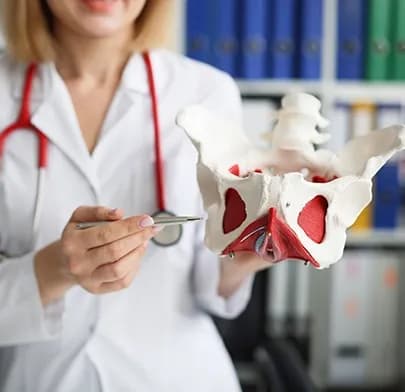
Pelvic Floor Reconstruction
Pelvic floor reconstruction is a group of surgical procedures used to repair weakened or damaged pelvic floor muscles and tissues. The pelvic floor supports the bladder, uterus (womb), rectum, and small intestine. When these muscles weaken, the organs can bulge or prolapse (drop down) into the vagina. This can cause a variety of symptoms, including urinary incontinence (leakage), pelvic pain, and difficulty with intercourse.
 Free Pick up and Drop
No Cost EMI
Post Surgery Care
Pelvic floor reconstruction is a group of surgical procedures used to repair weakened or damaged pelvic floor muscles and tissues. The pelvic floor supports the bladder, uterus (womb), rectum, and small intestine. When these muscles weaken, the organs can bulge or prolapse (drop down) into the vagina. This can cause a variety of symptoms, including urinary incontinence (leakage), pelvic pain, and difficulty with intercourse.
Symptoms Of Pelvic Floor Reconstruction
Symptoms
 Urinary incontinence
  Stress incontinence
 Pelvic organ prolapse
  Pain during intercourse
 Constipation
Types of conditions
There are 8 main types of Pelvic Floor Reconstruction
Vaginal Wall Repair (Colporrhaphy)
Mesh Implantation
Sacrocolpopexy
Rectocele Repair
Perineorrhaphy
Urethral Sling Procedure
Pelvic Floor Muscle Training (PFMT)
Fistula Repair
Vaginal Wall Repair (Colporrhaphy)
This procedure involves repairing and reinforcing the vaginal walls to treat conditions such as vaginal prolapse, where the organs in the pelvis descend into the vagina.
DIAGNOSIS
Diagnosis for hand and wrist surgery typically involves a combination of methods to pinpoint the exact cause of your symptoms and determine the most appropriate treatment approach. Here's a breakdown of some common diagnostic techniques:
1. Medical history: Your doctor will discuss your symptoms, including their onset, severity, and any aggravating or relieving factors. They will also inquire about your past medical history, occupation, and any previous injuries to the hand or wrist.
2. Physical examination: The doctor will carefully examine your hand and wrist, assessing for tenderness, swelling, deformity, range of motion, and strength. They may also perform specific tests to evaluate nerve function and sensation.
3. Imaging studies: X-rays are often the first-line imaging technique to visualize broken bones, arthritis, and other abnormalities in the bones and joints of the hand and wrist. Depending on the suspected condition, additional imaging like CT scans or MRIs might be used for a more detailed view of bones, soft tissues (tendons, ligaments), and nerves.
4. Diagnostic injections: In some cases, injecting a local anaesthetic into a specific area can temporarily relieve pain and help pinpoint the source of the problem. For example, an anaesthetic injection in the carpal tunnel can temporarily alleviate symptoms associated with carpal tunnel syndrome.
5. Nerve conduction studies and electromyography (EMG): These tests measure the electrical activity of nerves and muscles to assess nerve function and identify any damage to nerves or muscles in the hand or wrist.
By combining these diagnostic techniques, your doctor can accurately diagnose the underlying cause of your hand or wrist problems and recommend the most suitable treatment plan, whether it involves surgery, medication, physical therapy, or other options.
CAUSES/RISK FACTORS
Age: As we age, tissues become less elastic and healing can be slower, potentially increasing risks of infection or complications.
Underlying health conditions: Chronic conditions like diabetes, obesity, or autoimmune diseases can impair healing and increase infection risk.
Smoking: Smokers have poorer circulation which can hinder healing and increase the risk of wound complications.
The severity of the condition: Complex surgeries or those involving extensive reconstruction carry a higher inherent risk compared to simpler procedures.
Previous surgery: Scar tissue from prior surgeries in the same area can complicate the current surgery and increase infection risk.
Anaesthesia complications: While uncommon, risks associated with anaesthesia like allergic reactions or breathing difficulties exist for any surgery.
PREPARING FOR SURGERY
Here's a breakdown of key steps involved in preparing for hand and wrist surgery:
Pre-operative Consultation
- Detailed discussion with your surgeon: Discuss the surgery itself, potential risks and benefits, and recovery expectations.
- Medical history review: Inform your doctor about any medical conditions, medications you take, and allergies.
- Physical examination: The surgeon will assess your hand and wrist, and may recommend additional tests like X-rays.
Pre-operative Instructions
- Fasting: You'll likely be instructed to avoid eating or drinking anything (except water) for a specific period before surgery (usually 8-12 hours).
- Medications: Your doctor may advise stopping or adjusting certain medications before surgery.
- Blood thinners: If you take blood thinners, your doctor will advise on stopping or adjusting them before surgery to minimize bleeding risks.
- Smoking cessation: Smoking can hinder healing and increase infection risk. Quitting smoking well in advance of surgery is recommended.
- Clothing: Wear loose-fitting clothing that allows easy access to the surgical site (hand/wrist).
- Transportation and assistance: Arrange for someone to drive you home after surgery and potentially help you with daily activities during initial recovery.
Additional Considerations
- Showering/Bathing: Inquire about showering or bathing instructions before surgery, and any precautions for keeping the surgical site clean and dry.
- Valuables: Leave valuables at home, as you won't be able to access them easily during post-surgical recovery.
- Exercises: Your doctor might recommend specific hand or wrist exercises to improve flexibility and range of motion before surgery, aiding post-surgical recovery.
Remember, this is a general overview. Your doctor will provide specific instructions tailored to your individual needs and the type of hand and wrist surgery you'll be undergoing.
TREATMENT DETAILS
Types
- Fixing pinched nerves: Like carpal tunnel release, this frees a squished nerve in your wrist to stop pain and tingling.
- Sewing up torn tendons: Surgeons stitch ripped tendons back together to get your fingers and wrist moving smoothly again.
- Rebuilding broken stuff: If a bone breaks badly, they might use screws, plates, or even grafts to put it all back together.
- Fusing bones: In very bad arthritis, they might connect bones permanently to stop pain and make the joint more stable.
- Replacing worn-out parts: Just like a hip replacement, they can swap out a damaged joint in your hand or wrist for a new, artificial one.
- Fixing stuck fingers: If a finger gets stuck or bent, a surgeon can release the tightness and let it straighten again.
- Removing bumps and lumps: Sometimes fluid builds up in your hand, and surgery can take those bumps away.
- Smoothing out a tight palm: This surgery loosens thickened tissue that might make it hard to bend your fingers.
Technology used:
-
Arthroscopy: This minimally invasive technique uses a tiny camera and specialized instruments inserted through small incisions.
-
Fluoroscopy: This real-time X-ray imaging allows surgeons to see bones and some aspects of soft tissue movement during surgery. This helps ensure proper placement of implants like plates, screws, or wires used for fixing fractures.
-
Computer navigation: Sophisticated computer software can be used in conjunction with fluoroscopy, creating 3D models of the hand or wrist.
-
Robotic-assisted surgery: While still evolving in hand and wrist surgery, robotic systems can offer greater tremor control and improved dexterity for surgeons, potentially leading to even more precise and minimally invasive procedures in the future.
-
Magnification loupes: These high-powered magnifying glasses provide surgeons with a magnified view of the surgical site, enhancing visualization of delicate structures like nerves and tendons during intricate repairs.
-
Specialized surgical instruments: A variety of specialized instruments designed for hand and wrist surgery exist. These instruments allow for precise dissection, suturing, and manipulation of tiny structures within the hand and wrist.
Recovery
Immediately After Surgery
- You'll likely spend some time in a recovery room before going home.
- Your hand or wrist will be bandaged or splinted to immobilize it and promote healing.
- You might experience some pain, which can be managed with medication.
Here are some additional tips for a successful recovery:
- Maintain good hand hygiene to prevent infection.
- Attend all follow-up appointments with your doctor or therapist.
- Communicate any concerns or setbacks you experience to your healthcare provider.
- Be patient with your recovery. Regaining full function takes time and consistent effort
Your journey to good health begins here

Accredited Hospitals
Nationally accredited hospitals for high-quality care

Multi-language Support
Convey your needs in the language you're most comfortable in

Travel Booking Assistance
Seamless booking assistance for your healthcare journey

Personalised Treatment Plans
A treatment journey tailored to all your preferences and needs

Unparalleled Hospitality
Experience exceptional hospitality during your stay

Easy Medical Visa Approvals
Dedicated assistance for medical visa requirements

Your Medical Assistant
Get instant help planning your treatment journey
The best hospitals are partnered with Karetrip
Access world-class facilities from top hospitals










Consult with the most experienced doctors
Experience premium care from leading specialists






Cost estimation
Learn about the expenses involved in the procedure and what factors affect them.

Several factors can affect the cost estimation in Pelvic Floor Reconstruction.
-
Hospital type and location: Treatment costs can vary depending on the hospital's reputation, location (urban vs. rural areas), and the overall cost of living in the region. High-end hospitals and major cities tend to have higher charges.
-
Surgeon's fees and experience: The experience and reputation of the surgeon performing the surgery can influence their fees.
-
Facility fees: Costs associated with using the hospital's surgical suites, and other resources contribute to the overall bill.
-
Anaesthesia fees: The type of anaesthesia used during surgery (general vs. local) can affect the cost.
-
Medications: The specific medications used, can be very expensive.
-
Length of hospital stay: Complications or additional procedures during treatment can lead to a longer stay, increasing the cost.
-
Insurance coverage: Deductibles, co-pays, and out-of-pocket expenses will vary depending on your insurance plan. Some plans may have limited coverage for certain treatments or medications.
The average cost of Pelvic Floor Reconstruction in India is around ₹50,000 to ₹60,000.

₹60,000
High Cost
₹55,000
Average Cost
₹50,000
Low Cost
The LIST of AVERAGE COST of the Pelvic Floor Reconstruction across TOP 4 cities in India in Indian Rupee (INR) is as follows :
City
Lowest Cost
Average Cost
Highest Cost
Mumbai
₹50,000
₹55,000
₹60,000
Delhi
₹50,000
₹55,000
₹60,000
Hyderabad
₹50,000
₹55,000
₹60,000
Chennai
₹50,000
₹55,000
₹60,000
Commonly Asked Questions
Do I always need surgery for my hand or wrist pain?
Not always. Depending on the cause, conservative treatments like splinting, medication, or physical therapy might be sufficient.
What are the benefits of minimally invasive surgery?
Smaller incisions, less tissue disruption, quicker recovery time, and potentially less pain.
Will I need physical therapy after surgery?
Most likely, yes. Physical therapy helps regain strength, flexibility, and range of motion in your hand or wrist.
How long will I be in pain after surgery?
Pain management is a priority. You'll experience some pain initially, but medication and ice therapy can help control it.
When can I return to work?
Depends on your recovery journey.



"I had a successful surgery at Fortis Escorts Hospital, and it was all thanks to Karetrip's help in finding the right hospital for me. The entire process was smooth and stress-free, with Karetrip handling all the arrangements and answering any questions I had. The medical team at the hospital was outstanding, and the facilities were top-notch. I highly recommend Karetrip to anyone looking for a tension-free healthcare experience."
Read MoreFatima
Chattogram

"Thanks to Karetrip, I got connected with MAX Hospital in New Delhi. The team guided me through every step - from finding the right doctor to handling travel and visas. They made a daunting process feel like a breeze. The care I received at MAX Hospital was outstanding, and I can't thank Karetrip enough for making it possible. They truly put patients first and go the extra mile to ensure a smooth healthcare journey. I'm grateful beyond words!"
Read MoreHasan
Dhaka

"At first, I was unsure about having a medical procedure done in a foreign country. However, Karetrip's team at Indraprastha Apollo Hospital made me feel much better. The hospital was very clean, modern, and had everything they needed to help me. The staff were very kind and did everything they could to make me feel comfortable. I'm really happy with how my treatment turned out, and I appreciate Karetrip for making it easy and stress-free."
Read MoreImran
Sylhet
 Google Reviews4.9/5


I had a successful surgery at Fortis Escorts Hospital, and it was all thanks to Karetrip's help in finding the right hospital for me. The entire process was smooth and stress-free, with Karetrip handling all the arrangements and answering any questions I had. The medical team at the hospital was outstanding, and the facilities were top-notch. I highly recommend Karetrip to anyone looking for a tension-free healthcare experience.
Fatima
Chattogram
Google Reviews4.9/5