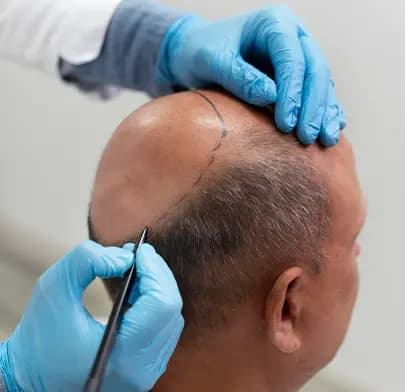
Hair Transplant
Hair transplant involves transplanting hair follicles from one part of the body (often the back or sides of the head) to areas experiencing hair loss.
 Free Pick up and Drop
No Cost EMI
Post Surgery Care
Hair transplant involves transplanting hair follicles from one part of the body (often the back or sides of the head) to areas experiencing hair loss.
Symptoms of Hair Transplant
Symptoms
 Thinning hair
 Receding hairline
 Bald spots
 Visible scalp
Types of conditions
There are 2 main types of Hair Transplant
Follicular Unit Transplantation (FUT)
Follicular Unit Extraction (FUE)
Follicular Unit Transplantation (FUT)
Follicular Unit Transplantation (FUT) involves harvesting a strip of scalp from the donor area, dissecting it into individual follicular units, and transplanting them into the recipient site.
TYPES OF CONDITIONS
Hair loss due to male pattern baldness, female pattern baldness, trauma, burns, or other medical conditions.
- Male pattern baldness: Also known as androgenetic alopecia, it's a hereditary condition characterized by hair thinning and receding hairlines in men, typically starting at the temples and crown.
- Female pattern baldness: Similar to male pattern baldness, but women experience diffuse thinning over the crown and widening of the parting line, often due to hormonal changes or genetics.
- Hair loss due to trauma: Results from physical injury to the scalp, such as accidents, surgery, or tight hairstyles, leading to hair follicle damage and subsequent hair loss.
- Hair loss due to burns: Burns on the scalp can damage hair follicles, causing permanent hair loss in the affected areas, often requiring surgical intervention for restoration.
- Hair loss due to medical conditions: Various medical conditions like alopecia areata, thyroid disorders, or chemotherapy can result in temporary or permanent hair loss, depending on the underlying cause and treatment.
DIAGNOSIS
Diagnosis involves a physical examination, medical history review, and sometimes scalp biopsy to determine the cause of hair loss and suitability for transplant.
-
Physical examination: The doctor assesses the scalp's health, hair density, and pattern of hair loss through visual inspection and tactile examination.
-
Medical history review: Understanding the patient's medical history helps identify potential underlying causes of hair loss, such as genetics, hormonal imbalances, or previous medical treatments.
-
Scalp biopsy: Involves taking a small sample of scalp tissue for microscopic examination to diagnose specific conditions affecting hair follicles and determine their health and viability for transplant procedures.
CAUSES/ RISK FACTORS
-
Genetics: Inherited predisposition to hair loss, with patterns influenced by family history and genetic makeup.
-
Hormonal changes: Fluctuations in hormone levels, such as during puberty, pregnancy, or menopause, can trigger hair loss.
-
Aging: Natural aging process leads to gradual hair thinning and loss due to decreased follicle function.
-
Stress: Emotional or physical stress can disrupt hair growth cycles, leading to temporary or chronic hair loss.
-
Medical conditions (e.g., alopecia): Various medical conditions like alopecia areata or thyroid disorders can cause hair loss by affecting follicle health.
-
Certain medications: Some medications, such as chemotherapy drugs, antidepressants, or blood thinners, can cause hair loss as a side effect.
PREPARING FOR SURGERY
Before surgery, patients should avoid medications that thin blood, quit smoking, and follow the surgeon's instructions regarding hair washing and scalp care.
-
Avoiding blood-thinning medications: Minimizes the risk of excessive bleeding during surgery and promotes proper healing.
-
Quitting smoking: Smoking can impair circulation and delay wound healing, so quitting before surgery reduces these risks.
-
Following surgeon's instructions: Helps optimize the scalp's condition for surgery and ensures the best possible outcome by following pre-operative care guidelines provided by the surgeon.
TREATMENT DETAILS
Hair transplant techniques encompass Follicular Unit Transplantation (FUT), where a strip of scalp is excised and dissected into follicular units, and Follicular Unit Extraction (FUE), which involves the direct extraction of individual follicles. Advanced methods, like robotic assistance, ensure precision during extraction and transplantation. FUT and FUE offer viable solutions for hair loss, tailored to individual needs and preferences, with minimal scarring and natural-looking results.
RECOVERY
Recovery typically takes a few days to a week, with some swelling and discomfort expected. Patients should follow post-operative care instructions to ensure optimal healing.
-
Duration: Recovery generally spans a few days to a week, with gradual improvement thereafter.
-
Swelling and discomfort: Common post-surgery symptoms that usually subside within a few days.
-
Post-operative care: Following instructions aids in proper healing and reduces the risk of complications, ensuring the best possible outcome.
Your journey to good health begins here

Accredited Hospitals
Nationally accredited hospitals for high-quality care

Multi-language Support
Convey your needs in the language you're most comfortable in

Travel Booking Assistance
Seamless booking assistance for your healthcare journey

Personalised Treatment Plans
A treatment journey tailored to all your preferences and needs

Unparalleled Hospitality
Experience exceptional hospitality during your stay

Easy Medical Visa Approvals
Dedicated assistance for medical visa requirements

Your Medical Assistant
Get instant help planning your treatment journey
The best hospitals are partnered with Karetrip
Access world-class facilities from top hospitals










Consult with the most experienced doctors
Experience premium care from leading specialists

Cost estimation
Learn about the expenses involved in the procedure and what factors affect them.

Cost factors include the extent of baldness, technique used, surgeon's expertise, and geographic location.
Get Cost EstimationThe average cost of Hair Transplant in India is around ₹ 30,000 to ₹ 1,70,000.

₹ 1,70,000
High Cost
₹ 80,000
Average Cost
₹ 30,000
Low Cost
The LIST of AVERAGE COST of the Hair Transplant across TOP 5 cities in India in Indian Rupee (INR) is as follows :
City
Lowest Cost
Average Cost
Highest Cost
Delhi
₹ 40,000
₹ 90,000
₹1,50,000
Mumbai
₹ 45,000
₹ 50,000
₹ 1,70,000
Bangalore
₹ 35,000
₹ 40,000
₹ 1,30,000
Kolkata
₹ 30,000
₹ 35,000
₹ 1,20,000
Chennai
₹ 30,000
₹ 35,000
₹ 1,40,000
Commonly Asked Questions
How long does a hair transplant last?
Results are usually permanent as transplanted hair is resistant to baldness.
Is hair transplant painful?
Local anesthesia is used during the procedure, so discomfort is minimal.
When will I see results?
New hair growth typically begins within a few months post-surgery.
Can anyone get a hair transplant?
Not everyone is a suitable candidate; a consultation with a surgeon is necessary.
Are there any side effects?
Temporary swelling and discomfort are common, but serious complications are rare.
Can transplanted hair be cut and styled?
Yes, transplanted hair grows like natural hair and can be cut and styled as desired.
Is hair transplant covered by insurance?
Typically not, as it's considered a cosmetic procedure.
How soon can I return to work after surgery?
Most patients can resume normal activities within a few days.



"I had a successful surgery at Fortis Escorts Hospital, and it was all thanks to Karetrip's help in finding the right hospital for me. The entire process was smooth and stress-free, with Karetrip handling all the arrangements and answering any questions I had. The medical team at the hospital was outstanding, and the facilities were top-notch. I highly recommend Karetrip to anyone looking for a tension-free healthcare experience."
Read MoreFatima
Chattogram

"Thanks to Karetrip, I got connected with MAX Hospital in New Delhi. The team guided me through every step - from finding the right doctor to handling travel and visas. They made a daunting process feel like a breeze. The care I received at MAX Hospital was outstanding, and I can't thank Karetrip enough for making it possible. They truly put patients first and go the extra mile to ensure a smooth healthcare journey. I'm grateful beyond words!"
Read MoreHasan
Dhaka

"At first, I was unsure about having a medical procedure done in a foreign country. However, Karetrip's team at Indraprastha Apollo Hospital made me feel much better. The hospital was very clean, modern, and had everything they needed to help me. The staff were very kind and did everything they could to make me feel comfortable. I'm really happy with how my treatment turned out, and I appreciate Karetrip for making it easy and stress-free."
Read MoreImran
Sylhet
 Google Reviews4.9/5


I had a successful surgery at Fortis Escorts Hospital, and it was all thanks to Karetrip's help in finding the right hospital for me. The entire process was smooth and stress-free, with Karetrip handling all the arrangements and answering any questions I had. The medical team at the hospital was outstanding, and the facilities were top-notch. I highly recommend Karetrip to anyone looking for a tension-free healthcare experience.
Fatima
Chattogram
Google Reviews4.9/5